
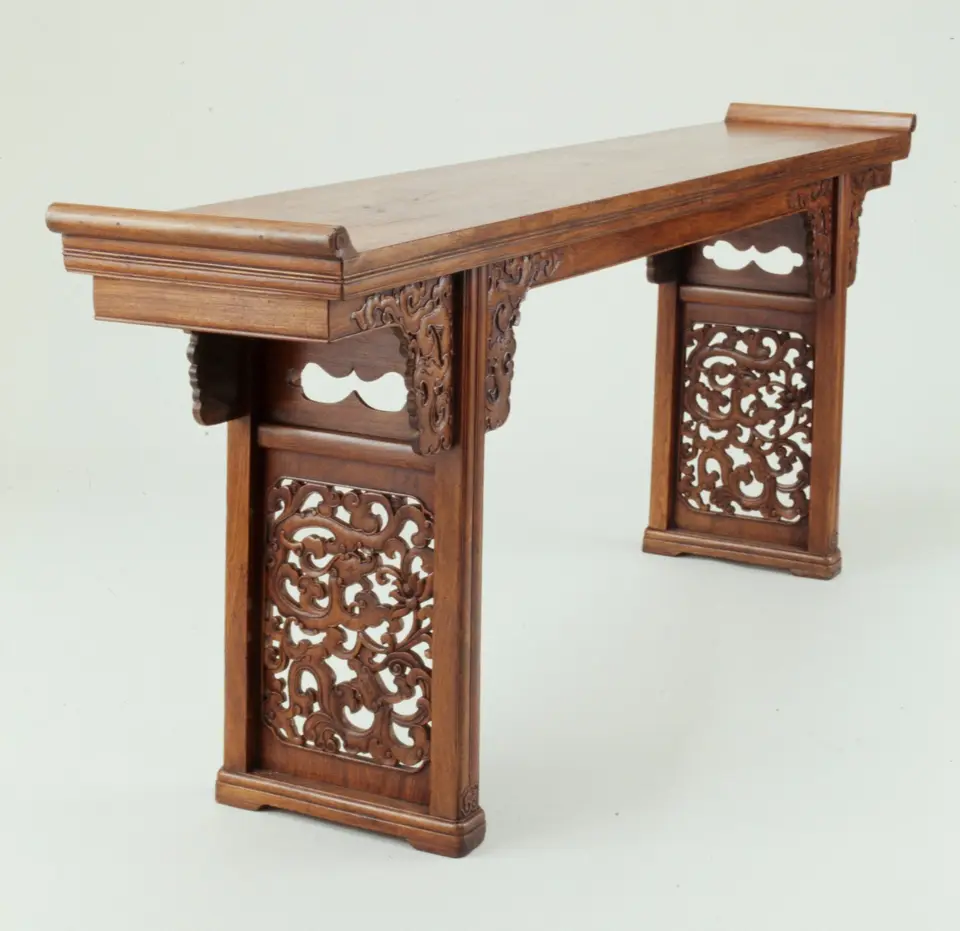
Portable long table (everted-end table)
The Minneapolis Institute of Art describes this long plank-top table as specially designed to be dismantled easily for storage or transport, and probably intended as an altar table, with phoenix carving in its “bridal” (bridle) joint, spandrels and leg stretchers. A long table whose top turns up at both ends is called 翘头案 (Wang Shixiang p.183). Here is how tables of this kind are usually joined.
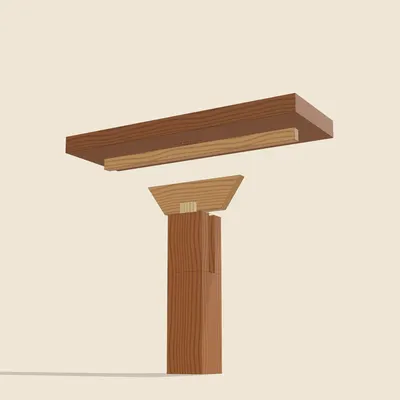
1Leg tops, apron and spandrels
The museum notes phoenix carving in the “bridal” (bridle) joint and the spandrels. In the clamping-head construction of recessed-leg tables, the leg top is slotted to clasp the long apron and, in the proper form, the spandrels as well; this enlarges the contact between leg and top, keeps their angle from shifting and spreads the load of the top evenly to the four legs. Typical practice (Wang Shixiang p.113).
2Side panels
The museum notes carved leg stretchers. On long tables with stretchers or shoes, a board is fitted in grooves between the two legs, above the stretcher or shoe, and is often carved. Typical practice (Wang Shixiang p.173).
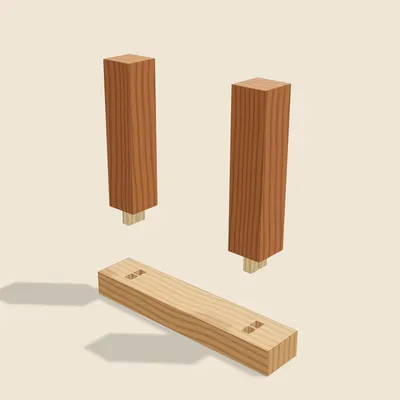
3Shoes under the legs
On long tables the foot of each leg carries two tenons into mortises at the end of a shoe; the two shoes each carry a pair of legs, and no member joins the two shoes. Typical practice (Wang Shixiang p.117).
References
- Minneapolis Institute of Art, Portable Long Table 97.25.1a-i (Public Domain)
- 王世襄《明式家具研究》(Wang Shixiang, Research on Ming Furniture),第 113 页;图 3.34a 见第 114 页,图 3.34b 见第 115 页;第 117 页;图 3.40 见第 116 页
- 王世襄《明式家具研究》(Wang Shixiang, Research on Ming Furniture),第 173 页(名词术语简释:挡板);第 183 页(名词术语简释:翘头、翘头案)
The object in the museum
- Title
- Portable Long Table
- Date
- 16th–17th century
- Material
- Huanghuali hardwood
- Dimensions
- 33 5/8 × 89 1/4 × 15 3/4 in. · 85.41 × 226.7 × 40.01 cm (converted from inches)
- Collection
- Minneapolis Institute of Art · 97.25.1a-i
The museum notes that this long plank-top table is specially designed to be dismantled easily for storage or transport, and was probably intended as an altar table. The carved phoenix decoration in its “bridal” [bridle] joint, spandrels and leg stretchers is typically Ming in spirit and reflects the Suzhou style. Long tables were made in plain and decorated versions, were nearly always placed against a wall, and typically displayed precious objects or ritual utensils such as censers or small statues used in religious ceremonies.
More furniture
Waisted square table →Waisted stool →High-waisted table →One-leg-three-aprons table →Waistless square table →Luohan bed (couch-bed) →Square-corner cabinet →Roundback armchair →Waisted kang table →Recessed-leg table →Everted-end altar table →Corner-leg painting table →Low-back armchair (rose chair) →Compound wardrobe →Small chest with drawers →Yokeback armchair (official’s hat chair) →Folding stool (jiaowu) →Incense stand →Daybed →Barrel-form stool (zuodun) →Display cabinet (liangge cabinet) →Continuous-yoke armchair (southern official’s hat chair) →Round-corner cabinet (tapered) →Six-post canopy bed →Folding roundback armchair →Book-carrying cabinet →Meditation stool →Lute table (qin table) →Two-drawer table →Recessed-leg stool →Clothes rack →Cosmetic case and mirror stand →Table-top chest (seal chest) →Four-sides-square long table →