
Waisted stool
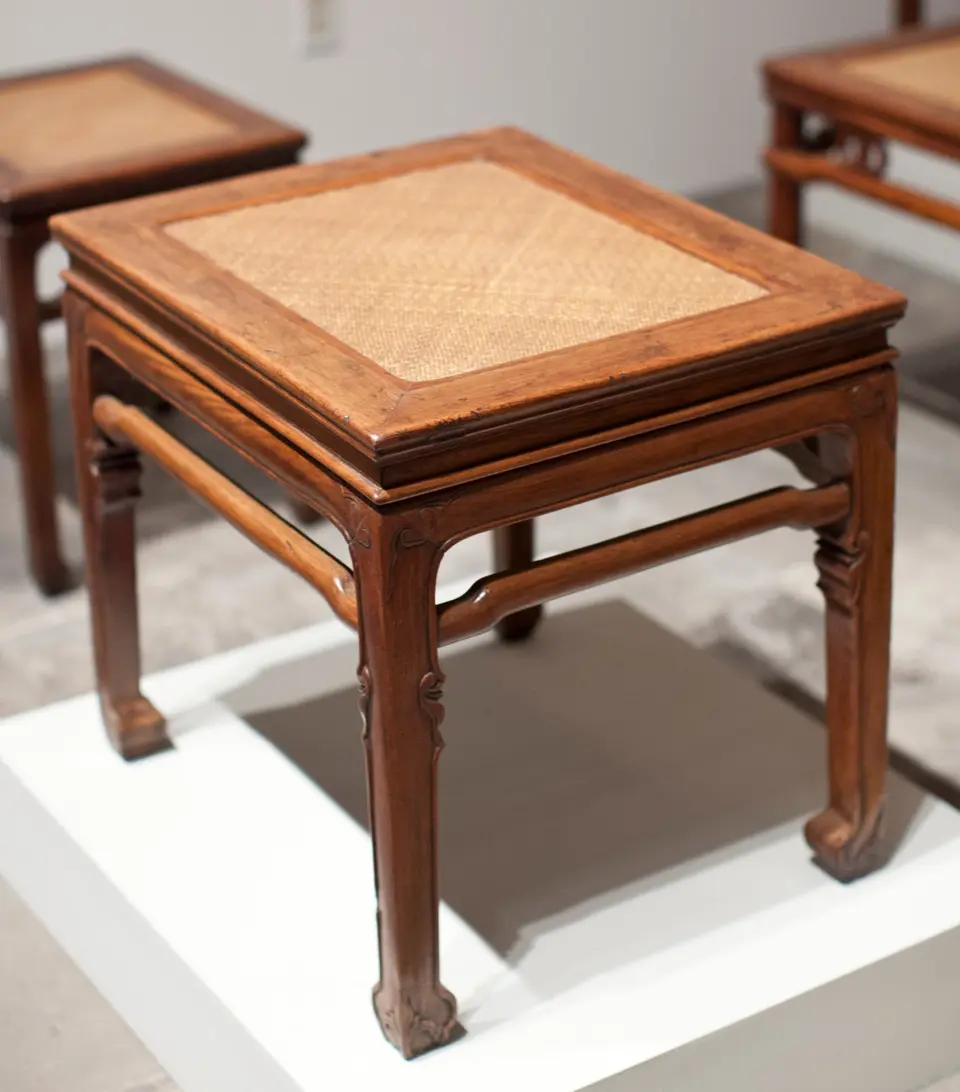
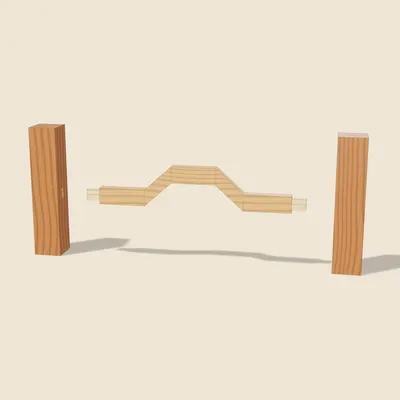
A waisted stool (有束腰方凳) is built like a small waisted table: recessed waist, apron flush with the legs, and usually horse-hoof feet. Many also carry hump-backed stretchers under the apron. Here is what holds it together, from the seat down.
1Seat frame
Mitred long sides and ends, grooved for a floating panel or a soft woven seat.
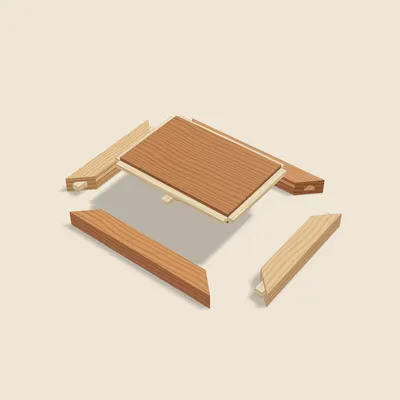
Frame and Floating Panel
cuánbiān dǎcáo zhuāngbǎnA mitred frame grooved on the inside, a thin panel with a tongued edge floating in the groove, and battens underneath.
Explore the joint →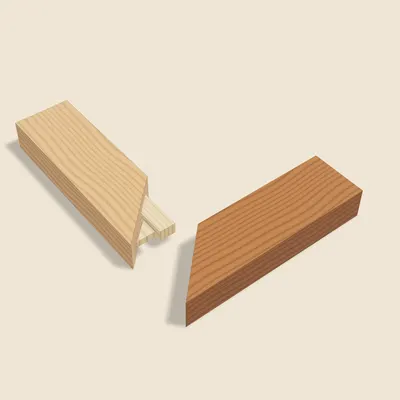
Mitred Frame Joint
géjiǎo sǔnThe 45° corner of every Chinese frame-and-panel top: a tenon through the end plus a little triangular tongue.
Explore the joint →2Panel or soft seat
A wood panel is edge-joined and held with battens; a soft seat is woven into the frame.
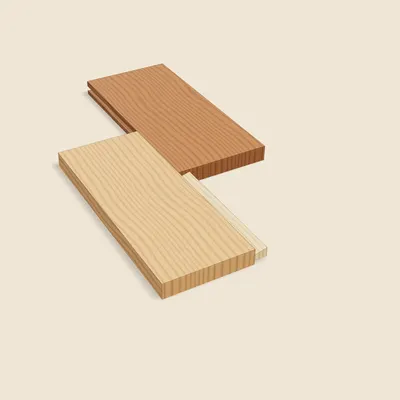
Longfeng Board Joint
lóngfèng sǔnA half-dovetail tongue on one board slides into a matching groove in the next, so the seam can neither step nor pull apart.
Explore the joint →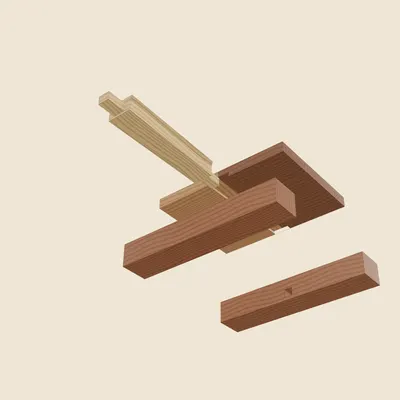
Sliding Dovetail Batten
chuāndàiA tapered dovetail batten driven across the back of a panel, its ends tenoned into the frame: the reason old tabletops stay flat.
Explore the joint →3Leg top into the seat
Each leg carries long and short blind tenons into the underside of the seat frame.
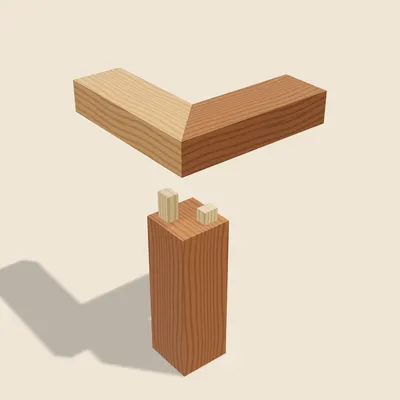
Long-and-Short Tenons
chángduǎn sǔnTwo tenons at right angles on the top of a leg: a long one for the long side, a short one for the end.
Explore the joint →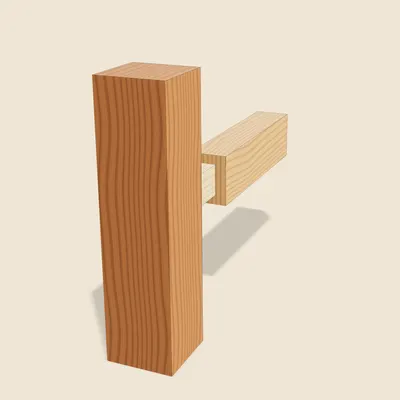
Blind Tenon
bàn sǔnThe tenon stops inside the post, so nothing shows on the outside: neat, a little less strong than a through tenon.
Explore the joint →4Leg, waist and apron
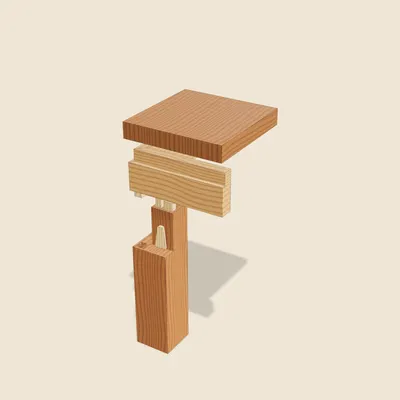
At each corner the baojian joint locks leg, waist and apron; the best old examples cut waist and apron from one piece.
5Stretchers
Many waisted stools add a hump-backed stretcher under the apron, low at the ends and raised in the middle.
The object in the museum
- Title
- Stool
- Date
- 17th century
- Material
- Huanghuali hardwood
- Dimensions
- 51.75 × 57.94 × 46.99 cm
- Collection
- Minneapolis Institute of Art · 2003.139
The museum notes that this richly carved waisted stool, because of its relatively elaborate detailing, would have been reserved for a person of high social standing. The legs carry a continuous corner bead ending in a stylised leaf at each foot, and a raised ruyi-head design is carved into the shoulder of each leg; the waist itself is set off with a bead course and a continuous step-back moulding around the seat frame.