
Incense stand
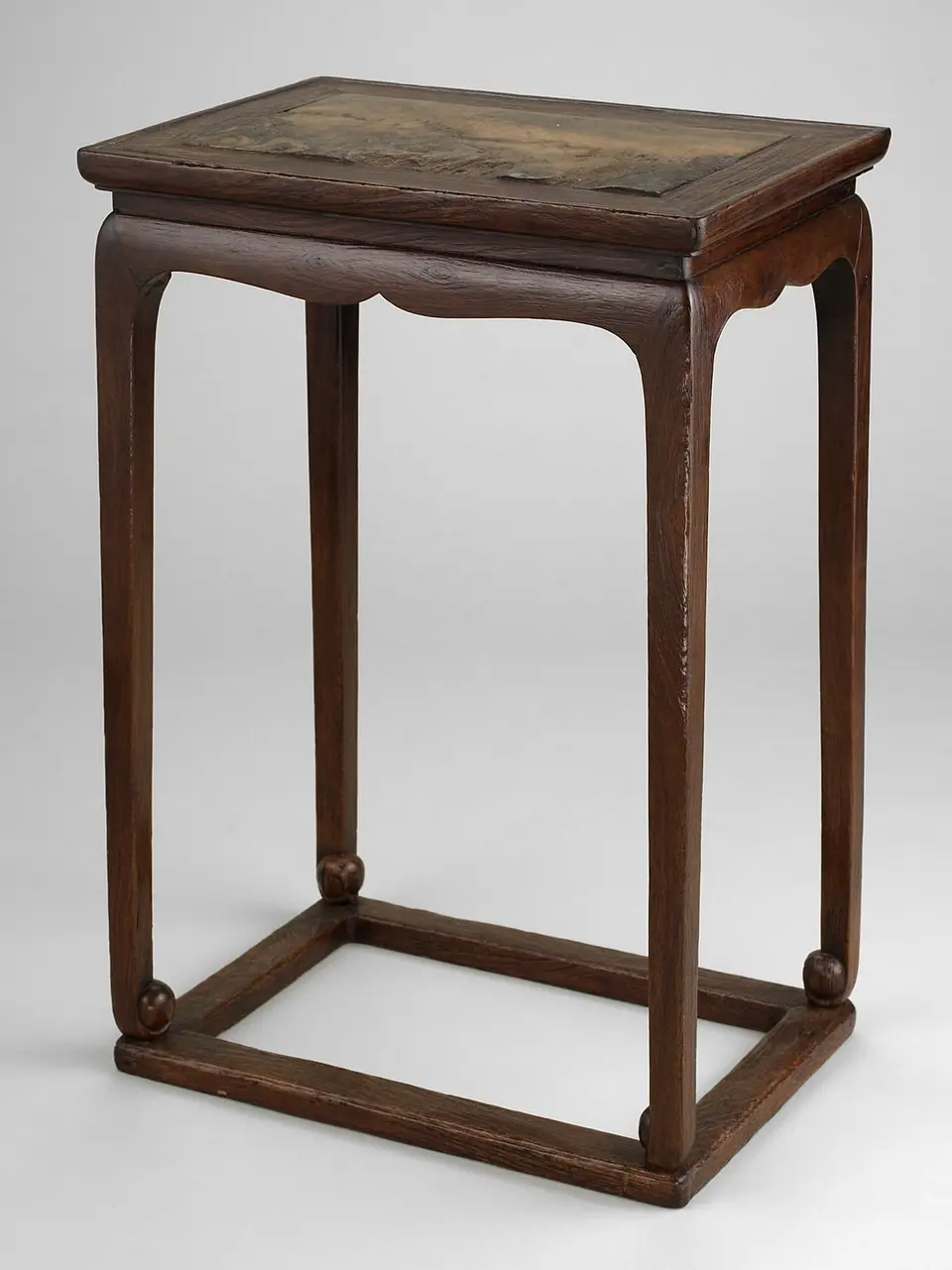
The Minneapolis Institute of Art explains that small high tables like this one served as incense stands in wealthy households; this one has an inlaid marble top, a durable, fire-retardant surface, and floor-stretchers that in effect make a space-frame. Here is how stands of this kind are usually joined, from the top down.
1Stone-panel top
The museum notes an inlaid marble top. A stone panel in a mitred frame rests on cross battens rather than on battens tenoned through the frame; its edges are bevelled, wide below and narrow above, and drop into a matching bevelled rebate in the frame, which holds the stone fast. Typical practice (Wang Shixiang p.110).
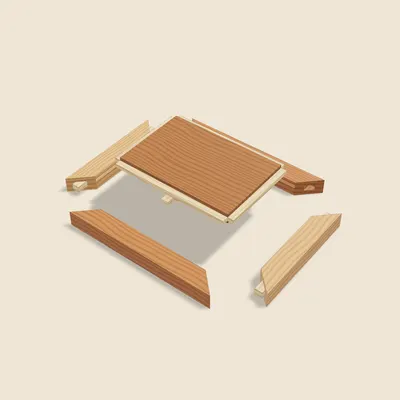
Frame and Floating Panel
cuánbiān dǎcáo zhuāngbǎnA mitred frame grooved on the inside, a thin panel with a tongued edge floating in the groove, and battens underneath.
Explore the joint →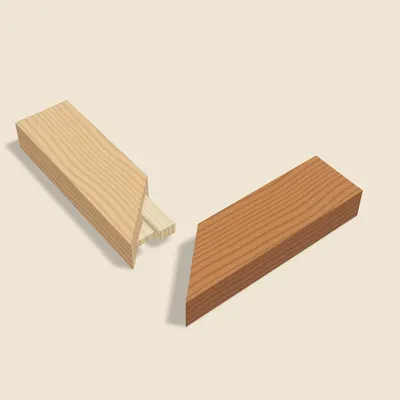
Mitred Frame Joint
géjiǎo sǔnThe 45° corner of every Chinese frame-and-panel top: a tenon through the end plus a little triangular tongue.
Explore the joint →2Waist, legs and apron
On waisted furniture, round incense stands included, the leg top carries long-and-short tenons into the frame; below the waist the leg is cut to a 45° shoulder with a triangular mortise that takes the mitred apron end, sometimes with a hanging pin as well: the baojian joint. Typical practice (Wang Shixiang p.111).
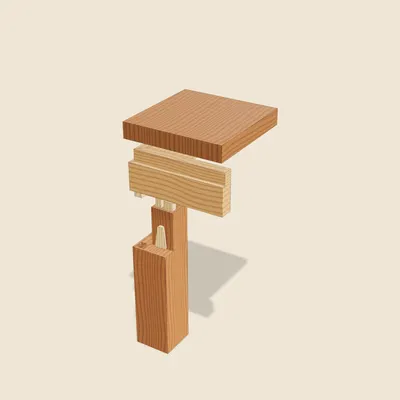
Baojian Joint
bàojiān sǔnThe hidden lock behind every waisted Ming table corner: a mitred shoulder, a triangular tenon and a tapered pin.
Explore the joint →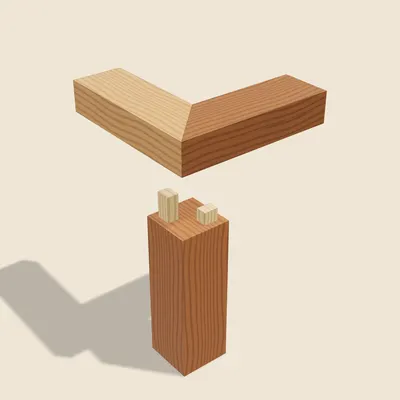
Long-and-Short Tenons
chángduǎn sǔnTwo tenons at right angles on the top of a leg: a long one for the long side, a short one for the end.
Explore the joint →3Floor frame
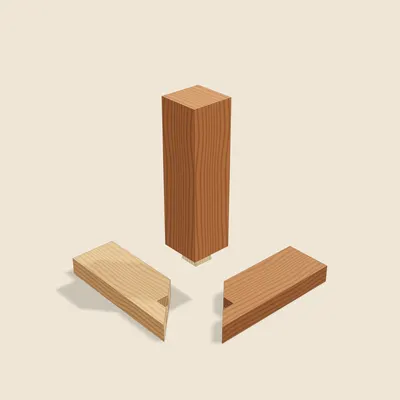
The museum notes floor-stretchers that make a space-frame. On square furniture with a frame under the feet, the four members are mitred together and each corner is mortised for a tenon on the foot of the leg. Typical practice (Wang Shixiang p.117).
References
- Minneapolis Institute of Art, Incense stand 2000.35.1 (Public Domain)
- 王世襄《明式家具研究》(Wang Shixiang, Research on Ming Furniture),第 110 页;第 111 页;图 3.30 见第 112 页
- 王世襄《明式家具研究》(Wang Shixiang, Research on Ming Furniture),第 117 页,图 3.41a
The object in the museum
- Title
- Incense stand
- Date
- late 16th century
- Material
- Huanghuali hardwood and marble
- Dimensions
- 30 13/16 × 20 7/8 × 14 3/4 in. · 78.3 × 53 × 37.5 cm (converted from inches)
- Collection
- Minneapolis Institute of Art · 2000.35.1
The museum explains that small square or rectangular high tables were generally used as incense stands in wealthy households; this sixteenth-century example has an inlaid marble top, a durable, fire-retardant surface for burning rare fragrances. Incense stands were typically fitted with floor-stretchers, in effect making a space-frame, and all edges and corners here are rounded, including each foot. Stands were used alone indoors and out, in pairs flanking thrones, and before ancestral shrines or large altar tables. Illustrated Ming books suggest round and square stands were common in upper-class homes, but because the construction is fragile remarkably few survive.
More furniture
Waisted square table →Waisted stool →High-waisted table →One-leg-three-aprons table →Waistless square table →Luohan bed (couch-bed) →Square-corner cabinet →Roundback armchair →Waisted kang table →Recessed-leg table →Everted-end altar table →Corner-leg painting table →Low-back armchair (rose chair) →Compound wardrobe →Small chest with drawers →Yokeback armchair (official’s hat chair) →Folding stool (jiaowu) →Daybed →Barrel-form stool (zuodun) →Display cabinet (liangge cabinet) →Portable long table (everted-end table) →Continuous-yoke armchair (southern official’s hat chair) →Round-corner cabinet (tapered) →Six-post canopy bed →Folding roundback armchair →Book-carrying cabinet →Meditation stool →Lute table (qin table) →Two-drawer table →Recessed-leg stool →Clothes rack →Cosmetic case and mirror stand →Table-top chest (seal chest) →Four-sides-square long table →