
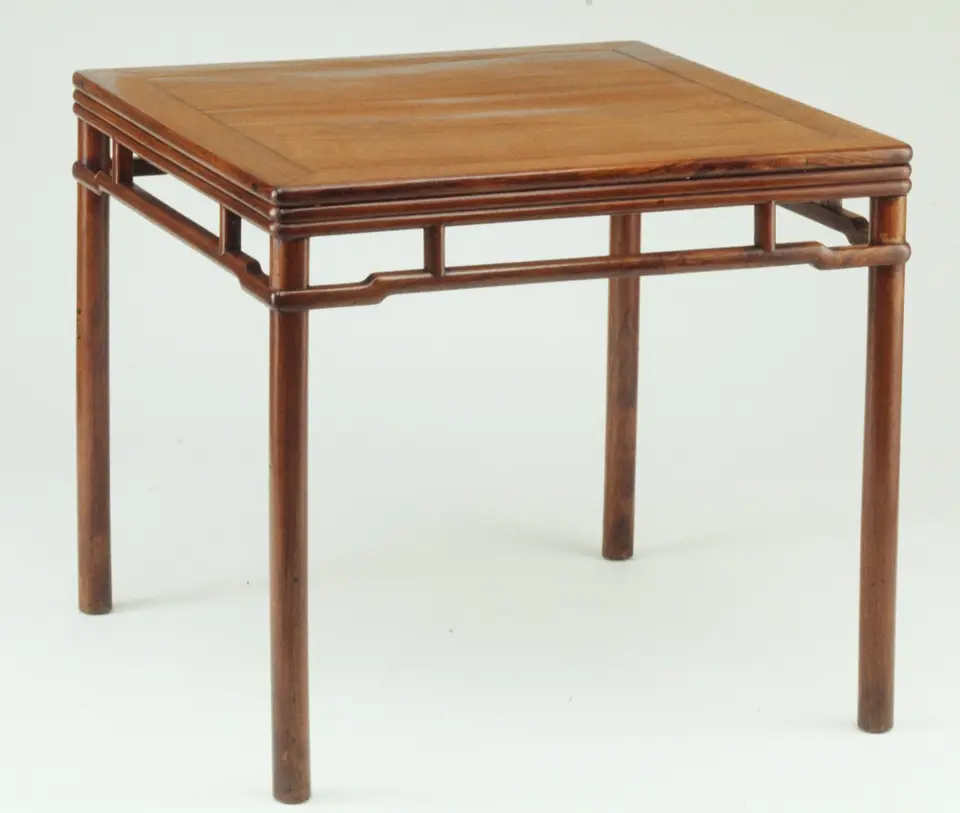
Waistless square table
Without a recessed waist the aprons sit right under the top. Round or square legs tenon up into the frame, and a hump-backed stretcher with short posts often braces the span. Here is what holds it together.
1Top frame and panel
Mitred frame grooved for a floating panel, with battens underneath.
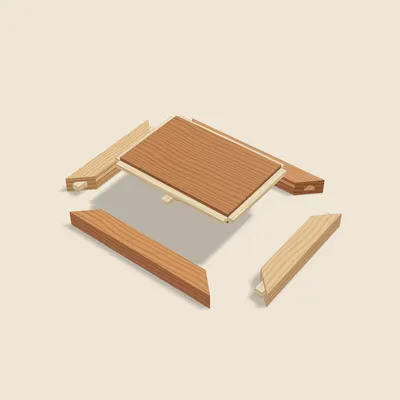
Frame and Floating Panel
cuánbiān dǎcáo zhuāngbǎnA mitred frame grooved on the inside, a thin panel with a tongued edge floating in the groove, and battens underneath.
Explore the joint →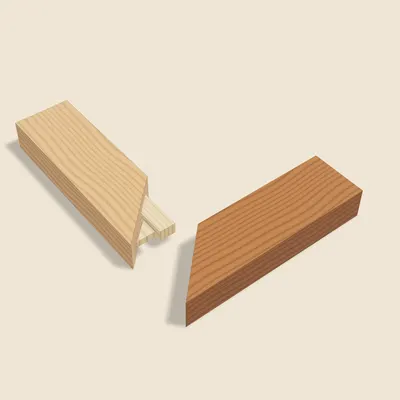
Mitred Frame Joint
géjiǎo sǔnThe 45° corner of every Chinese frame-and-panel top: a tenon through the end plus a little triangular tongue.
Explore the joint →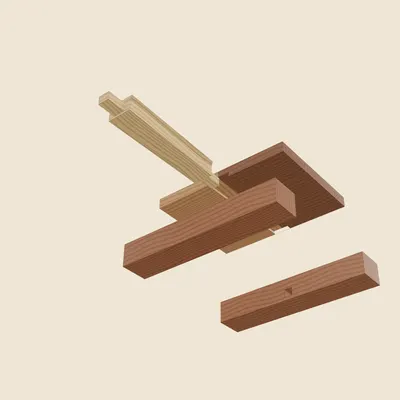
Sliding Dovetail Batten
chuāndàiA tapered dovetail batten driven across the back of a panel, its ends tenoned into the frame: the reason old tabletops stay flat.
Explore the joint →2Leg into the top
The leg runs straight up to the frame and ends in tenons into its underside; aprons tenon into the leg just below.
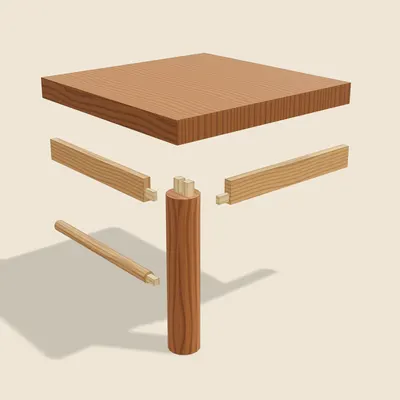
Waistless Stool: Leg to Seat
wú shùyāo wùdèngWithout a waist the aprons sit right under the seat: the round leg tenons up into the seat frame, and the aprons and stretchers tenon into the leg.
Explore the joint →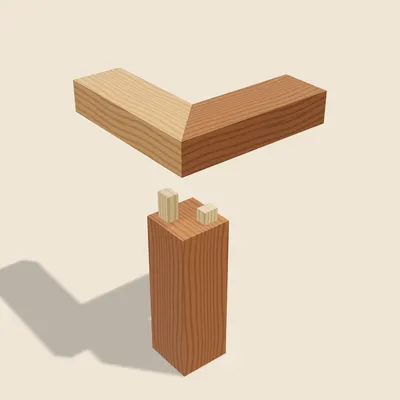
Long-and-Short Tenons
chángduǎn sǔnTwo tenons at right angles on the top of a leg: a long one for the long side, a short one for the end.
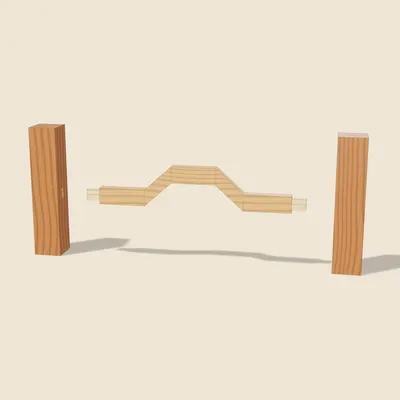
Explore the joint →3Hump-backed stretcher
A stretcher low at the ends and arched in the middle braces the legs without hitting the sitter’s knees.
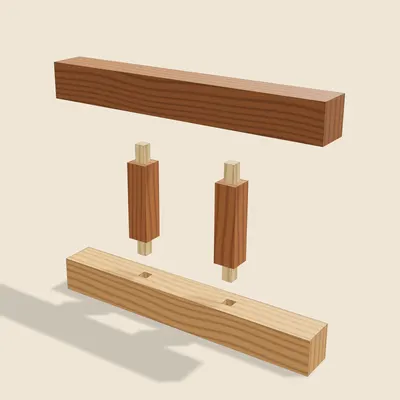
4Short posts
Short posts stand on the hump and tenon into the stretcher below and the top or apron above.
The object in the museum
- Title
- Square Table
- Date
- 17th century
- Material
- Huanghuali hardwood
- Dimensions
- 85.7 × 99.1 × 99.1 cm
- Collection
- Minneapolis Institute of Art · 94.30.1