
One-leg-three-aprons table
On a classic Ming square table the legs stand a little in from the corners. That leaves room for a third apron — a small spandrel across each corner — so every leg meets three aprons. Here is what holds it together.
1Top
Mitred frame and floating panel, often with a thickened border under the edge.
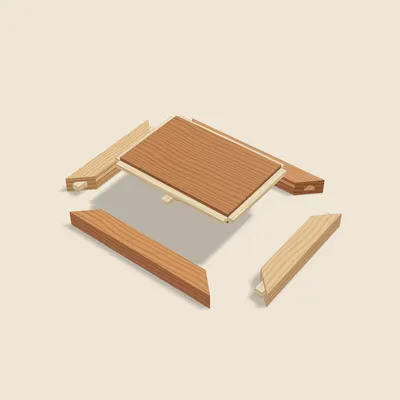
Frame and Floating Panel
cuánbiān dǎcáo zhuāngbǎnA mitred frame grooved on the inside, a thin panel with a tongued edge floating in the groove, and battens underneath.
Explore the joint →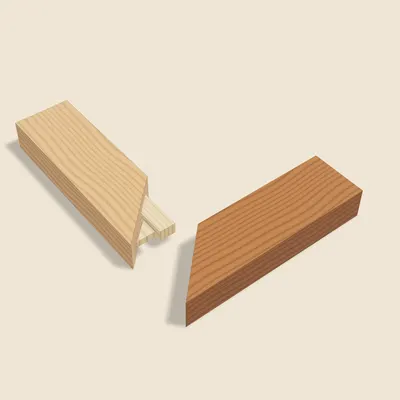
Mitred Frame Joint
géjiǎo sǔnThe 45° corner of every Chinese frame-and-panel top: a tenon through the end plus a little triangular tongue.
Explore the joint →2Aprons to the top
The thin aprons and the corner spandrel cannot easily carry their own tenons; loose tenons in their top edges go into the underside of the top.
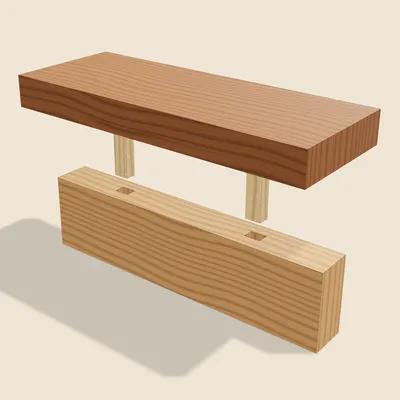
Loose Tenon
zāi xiāoThe tenon is a separate piece of wood planted into mortises in both parts, easy to replace if it wears.
Explore the joint →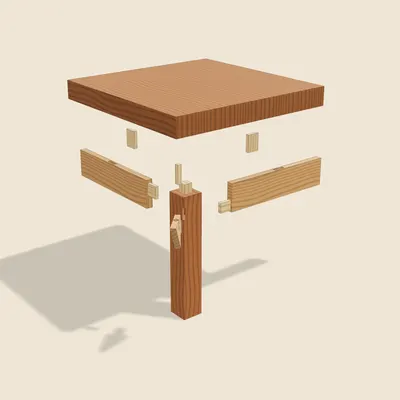
One Leg, Three Aprons
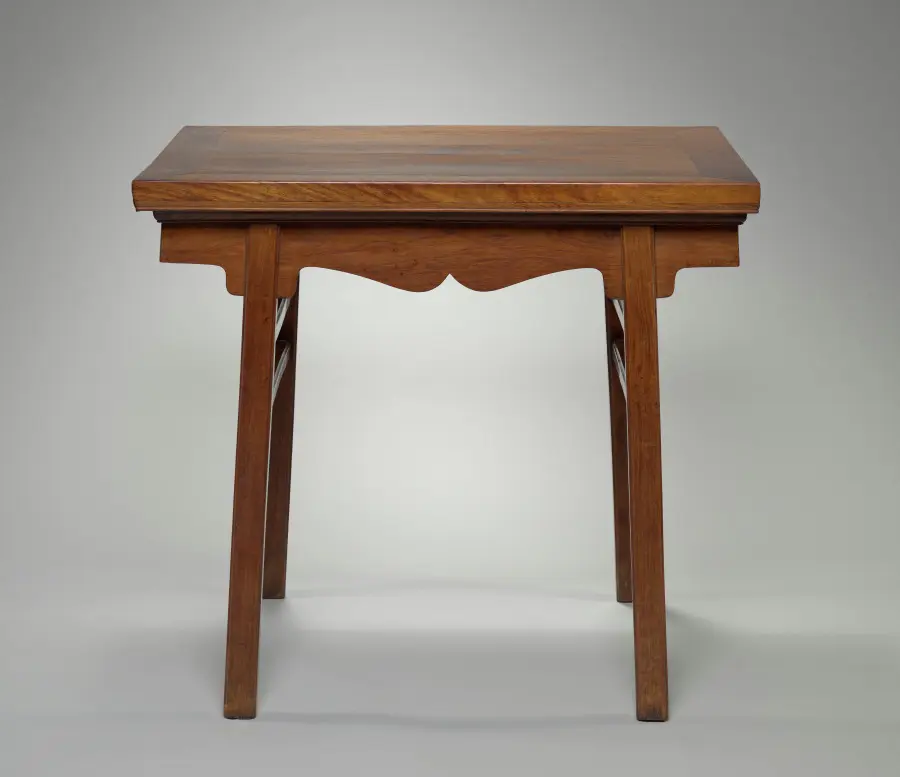
yī tuǐ sān yáEach leg meets three aprons: the two long aprons on either side and a small spandrel set across the table corner, all tied to the top with loose tenons.
Explore the joint →3Leg and three aprons
Two long aprons tenon into the leg from the sides; a small spandrel sits across the corner on the diagonal.
4Stretchers (when present)
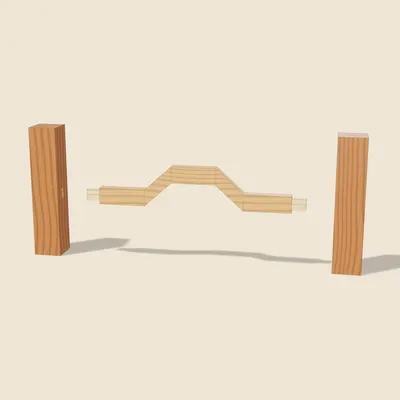
Some tables of this form also carry a hump-backed stretcher low on the legs.
The object in the museum
- Title
- Game Table
- Date
- 1600s
- Material
- Rosewood (huanghuali)
- Dimensions
- 82 × 72.2 cm
- Collection
- Cleveland Museum of Art · 1955.38