
Display cabinet (liangge cabinet)
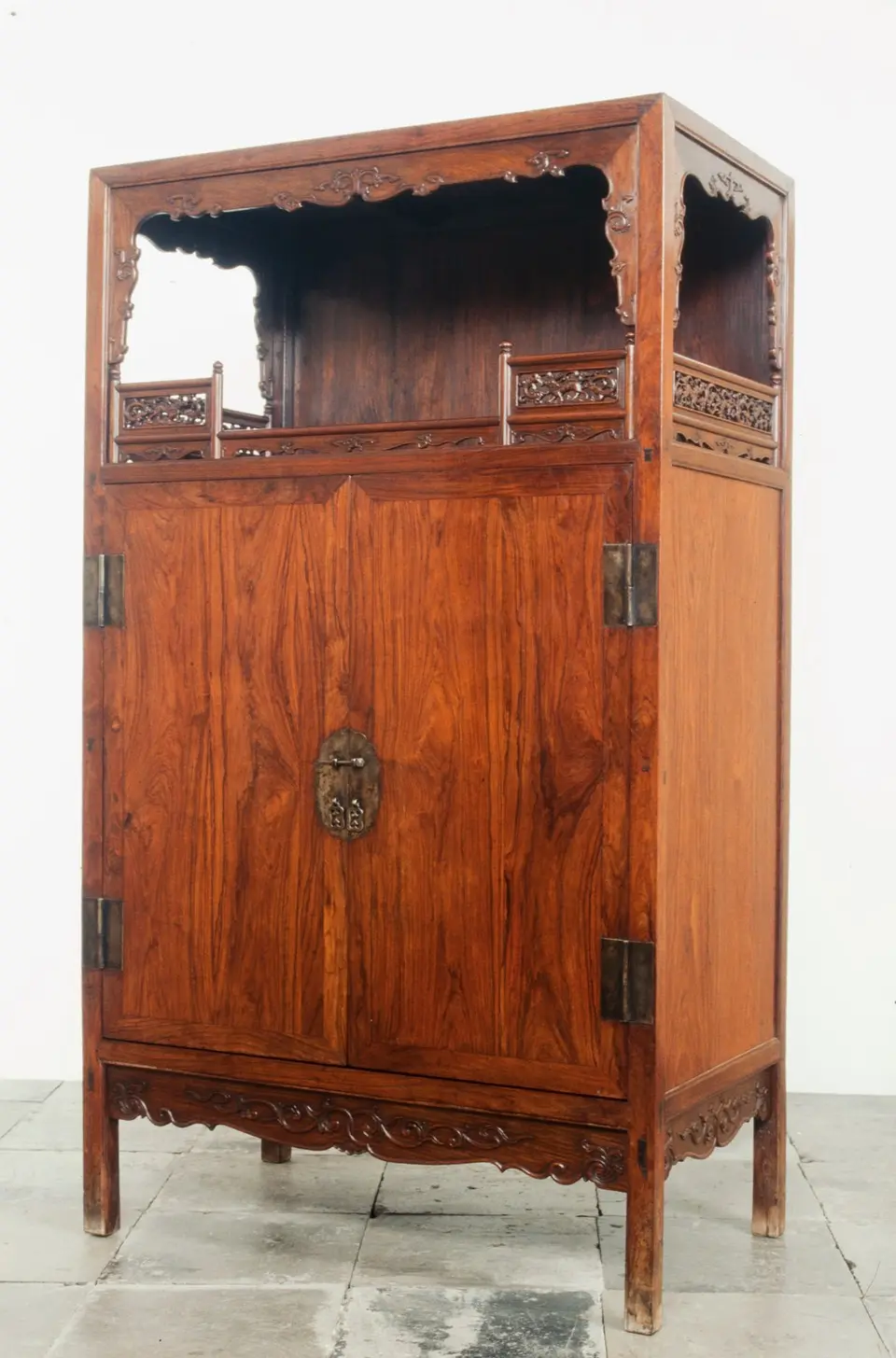
The Minneapolis Institute of Art notes that very few Ming-style cabinets were made specifically to store and display art: a high open shelf, framed by railings, shows antiques or decorative objects, and a cupboard below keeps the treasures not on show. A piece that is part open shelf and part cupboard is called 亮格柜 (Wang Shixiang p.180). Here is how such a cabinet is usually joined.
1Display shelf
The museum notes decorative inner frames and railings around the open shelf, carved in openwork with striding lions amid dragon-cloud scrolls, and says the carving is concentrated here to draw the eye to the object on display. Such an open compartment is called a liangge, a “bright compartment”, because it has no doors (Wang Shixiang p.180).
2Doors and sides
Door and side frames of square-corner cabinets are mitred at all four corners and grooved for floating panels, with battens under the panel tenoned into the long frame members. Typical practice (Wang Shixiang p.110).
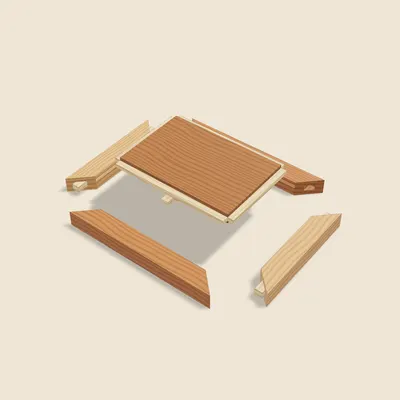
Frame and Floating Panel
cuánbiān dǎcáo zhuāngbǎnA mitred frame grooved on the inside, a thin panel with a tongued edge floating in the groove, and battens underneath.
Explore the joint →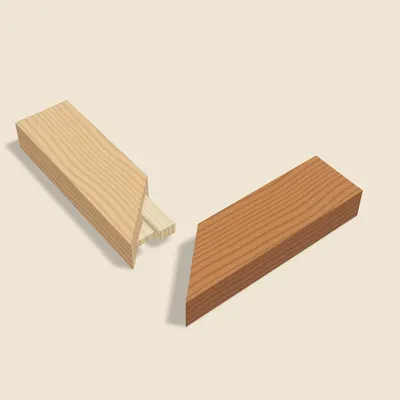
Mitred Frame Joint
géjiǎo sǔnThe 45° corner of every Chinese frame-and-panel top: a tenon through the end plus a little triangular tongue.
Explore the joint →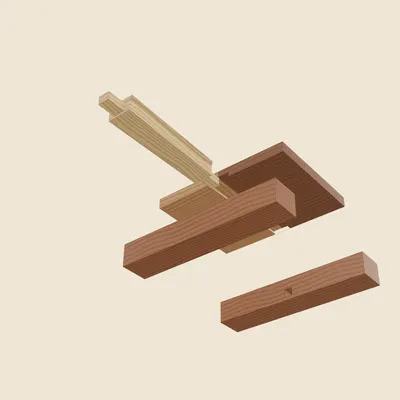
Sliding Dovetail Batten
chuāndàiA tapered dovetail batten driven across the back of a panel, its ends tenoned into the frame: the reason old tabletops stay flat.
Explore the joint →3Rails into the uprights
Rails meet the uprights of large cabinets at T-joints; square members usually take a mitred shoulder so the faces run on, and tenons on the show faces are mostly blind. Typical practice (Wang Shixiang p.103; p.105).
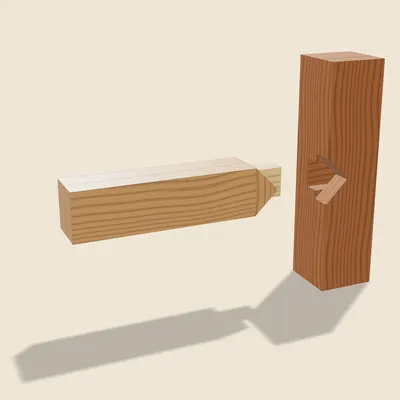
Mitred-Shoulder Joint
géjiān sǔnWhere a rail meets a post, its outer face is cut to a point that fits a matching notch, so mouldings meet cleanly.
Explore the joint →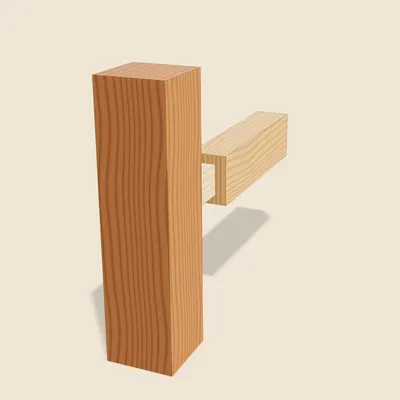
Blind Tenon
bàn sǔnThe tenon stops inside the post, so nothing shows on the outside: neat, a little less strong than a through tenon.
Explore the joint →4Bottom stretchers
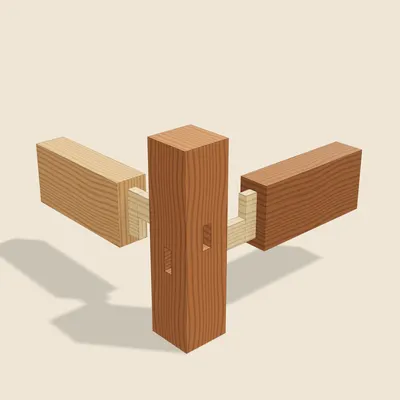
On cabinets raised on legs, the front and side bottom stretchers meet each leg at the same height, so both tenons are cut “big in, small out” and pass each other. Typical practice (Wang Shixiang p.105).
References
- Minneapolis Institute of Art, Display Cabinet, one of a pair 2001.32.1.1a-e (Public Domain)
- 王世襄《明式家具研究》(Wang Shixiang, Research on Ming Furniture),第 103 页;第 105 页;图 3.15a 见第 107 页;第 110 页,图 3.24;图 3.23a、3.23b 见第 109 页
- 王世襄《明式家具研究》(Wang Shixiang, Research on Ming Furniture),第 180 页(名词术语简释:亮格、亮格柜)
The object in the museum
- Title
- Display Cabinet, one of a pair
- Date
- 18th century
- Material
- Huanghuali hardwood
- Dimensions
- 74 5/16 × 43 × 24 9/16 in. · 188.8 × 109.2 × 62.4 cm (converted from inches)
- Collection
- Minneapolis Institute of Art · 2001.32.1.1a-e
According to the museum, very few Ming-style cabinets were made specifically to store and display art. This pair has decorative inner frames and railings around the open shelves, and huanghuali is used throughout, including the backs, shelves, tops and bottoms. Cabinets of this type have a high open shelf for antiques or decorative objects and a cupboard below, with shelves and drawers, for treasures not on show. Displays were changed often, with the season or for special events, and the carving is concentrated around the display shelf to focus attention on the object. The railings are carved in openwork with striding lions amid dragon-cloud scrolls, animals associated with energy and valour. Used in the public rooms of a house, such furniture spoke directly of wealth, status, refinement and taste.
More furniture
Waisted square table →Waisted stool →High-waisted table →One-leg-three-aprons table →Waistless square table →Luohan bed (couch-bed) →Square-corner cabinet →Roundback armchair →Waisted kang table →Recessed-leg table →Everted-end altar table →Corner-leg painting table →Low-back armchair (rose chair) →Compound wardrobe →Small chest with drawers →Yokeback armchair (official’s hat chair) →Folding stool (jiaowu) →Incense stand →Daybed →Barrel-form stool (zuodun) →Portable long table (everted-end table) →Continuous-yoke armchair (southern official’s hat chair) →Round-corner cabinet (tapered) →Six-post canopy bed →Folding roundback armchair →Book-carrying cabinet →Meditation stool →Lute table (qin table) →Two-drawer table →Recessed-leg stool →Clothes rack →Cosmetic case and mirror stand →Table-top chest (seal chest) →Four-sides-square long table →