
Luohan bed (couch-bed)
A luohan bed, or low-back couch-bed (罗汉床 / 床), is a platform for sitting and sleeping with solid rails on three sides. Many Ming examples are waisted corner-leg frames: a recessed waist, aprons flush with the legs, and hoof feet. Here is what holds one together, from the seat down.
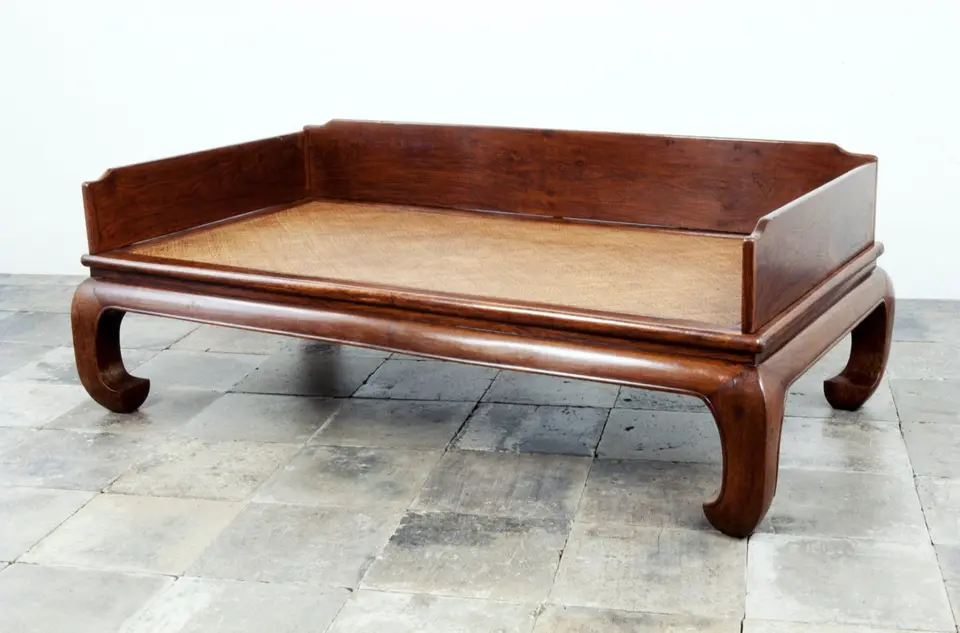
1Seat frame
Mitred long sides and ends, grooved for a floating panel or a soft woven seat.
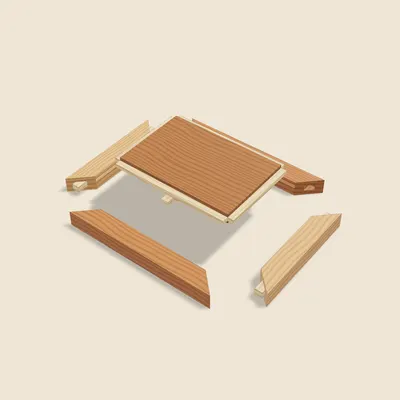
Frame and Floating Panel
cuánbiān dǎcáo zhuāngbǎnA mitred frame grooved on the inside, a thin panel with a tongued edge floating in the groove, and battens underneath.
Explore the joint →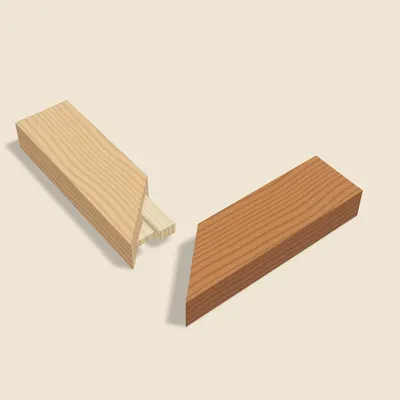
Mitred Frame Joint
géjiǎo sǔnThe 45° corner of every Chinese frame-and-panel top: a tenon through the end plus a little triangular tongue.
Explore the joint →2Panel or soft seat
A wood panel is edge-joined and held with battens; a soft seat is woven into the frame.
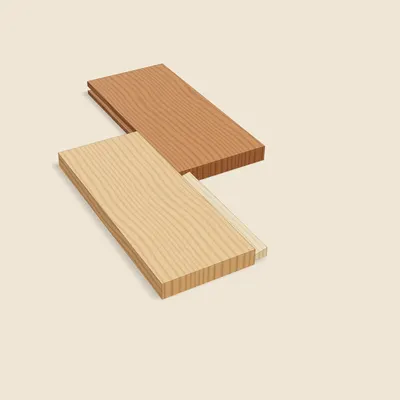
Longfeng Board Joint
lóngfèng sǔnA half-dovetail tongue on one board slides into a matching groove in the next, so the seam can neither step nor pull apart.
Explore the joint →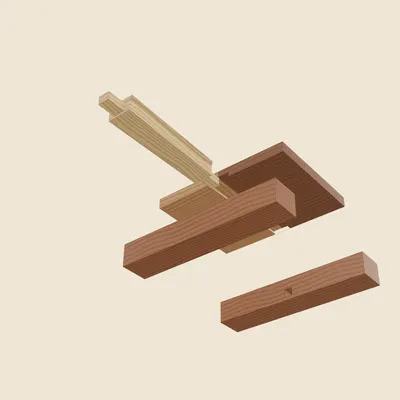
Sliding Dovetail Batten
chuāndàiA tapered dovetail batten driven across the back of a panel, its ends tenoned into the frame: the reason old tabletops stay flat.
Explore the joint →3Leg, waist and apron
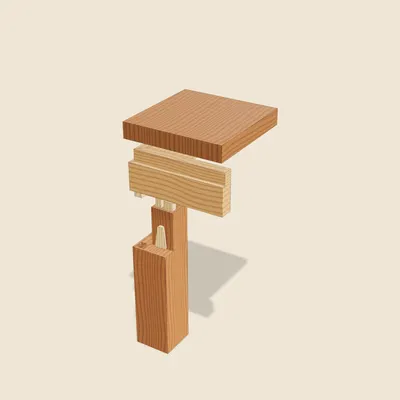
At each corner the baojian joint locks leg, recessed waist and apron; the outside often reads as one continuous bead into the horse-hoof foot.
4Leg into the seat
Each leg carries long and short blind tenons into the underside of the seat frame.
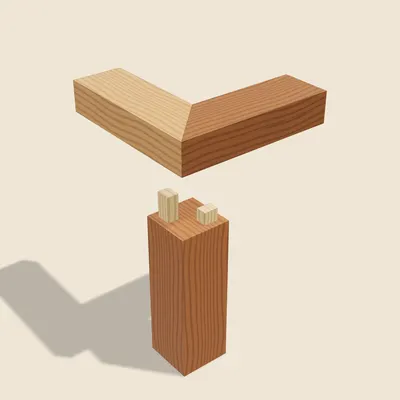
Long-and-Short Tenons
chángduǎn sǔnTwo tenons at right angles on the top of a leg: a long one for the long side, a short one for the end.
Explore the joint →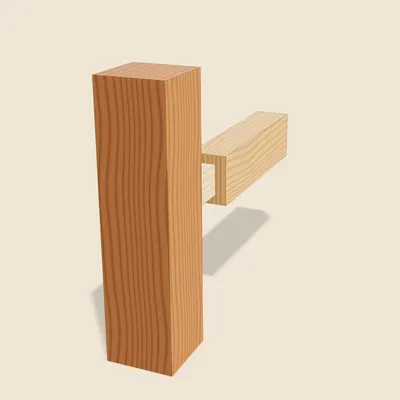
Blind Tenon
bàn sǔnThe tenon stops inside the post, so nothing shows on the outside: neat, a little less strong than a through tenon.
Explore the joint →5Side and back rails
Solid rails rise from the seat on three sides and tenon into short posts or into the corner structure of the frame.
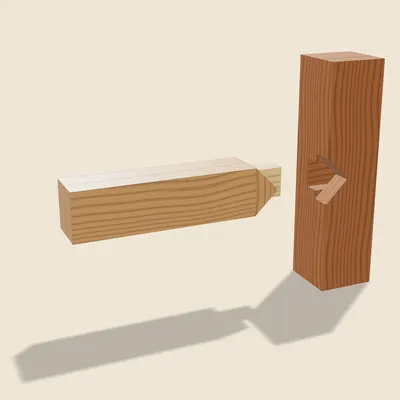
Mitred-Shoulder Joint
géjiān sǔnWhere a rail meets a post, its outer face is cut to a point that fits a matching notch, so mouldings meet cleanly.
Explore the joint →Blind Tenon
bàn sǔnThe tenon stops inside the post, so nothing shows on the outside: neat, a little less strong than a through tenon.
Explore the joint →The object in the museum
- Title
- Couch-Bed
- Date
- c. 1600
- Material
- Huanghuali hardwood
- Dimensions
- 31 1/2 × 85 3/4 × 46 1/2 in. · 80.01 × 217.81 × 118.11 cm (converted from inches)
- Collection
- Minneapolis Institute of Art · 98.78.1a-d
The museum describes this low-back couch-bed (chuang) with solid rails as among the simplest Ming forms: a corner-leg frame evolved from earlier box-style platforms, used for sitting, reclining and sleeping in reception halls, studios and women’s quarters, often with a low table on the platform. It relies on boldly outcurved legs, a concave waist and strong graining rather than carved ornament, with powerful inward-turning legs and convex aprons whose bead mouldings continue down the inside edges of the hoofed feet.
More furniture
Waisted square table →Waisted stool →High-waisted table →One-leg-three-aprons table →Waistless square table →Square-corner cabinet →Roundback armchair →Waisted kang table →Recessed-leg table →Everted-end altar table →Corner-leg painting table →Low-back armchair (rose chair) →Compound wardrobe →Small chest with drawers →Yokeback armchair (official’s hat chair) →Folding stool (jiaowu) →Incense stand →Daybed →Barrel-form stool (zuodun) →Display cabinet (liangge cabinet) →Portable long table (everted-end table) →Continuous-yoke armchair (southern official’s hat chair) →Round-corner cabinet (tapered) →Six-post canopy bed →Folding roundback armchair →Book-carrying cabinet →Meditation stool →Lute table (qin table) →Two-drawer table →Recessed-leg stool →Clothes rack →Cosmetic case and mirror stand →Table-top chest (seal chest) →Four-sides-square long table →