
Luban Lock: how to solve it, types, 3D & free STL
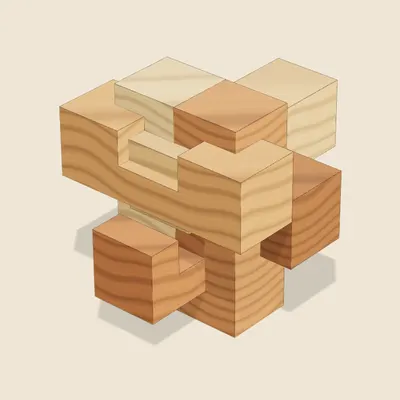
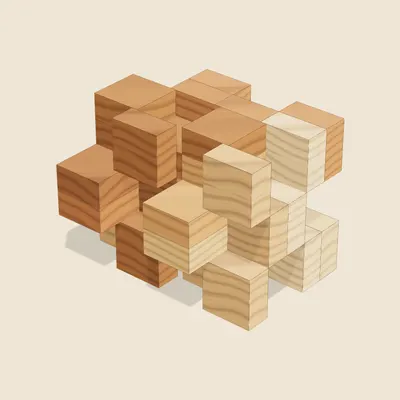
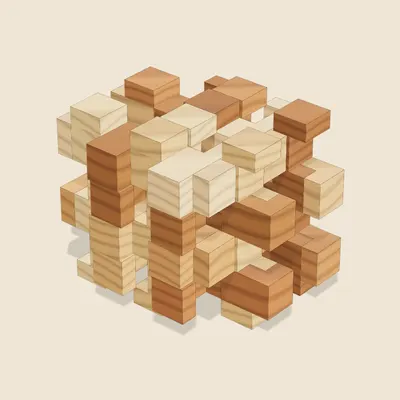
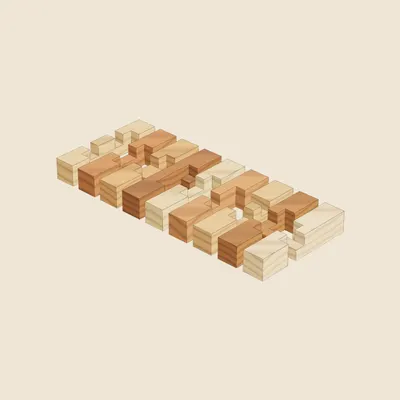
A Luban lock (鲁班锁) is a notched-stick burr puzzle: six or more bars lock into a cross until the key piece moves first. To solve the classic six-piece set, assemble 256 → 928 → 824 → 975 → 1024 → key (piece 1); take it apart in reverse. Below: that sequence with stills, a types table (3/6/9/12/24 and pineapple), and links to interactive 3D and free STL on each working model.
-
-
-
-
-

- Large pineapple Usually 33 pieces; listed only — no printable model yet.
How to solve the six-piece Luban lock
The classic six-piece Luban lock (Chinese cross) uses von Känel pieces {1, 256, 824, 928, 975, 1024}. Assemble in this order: 256 → 928 → 824 → 975 → 1024 → key (piece 1). Disassemble in reverse — key out first.
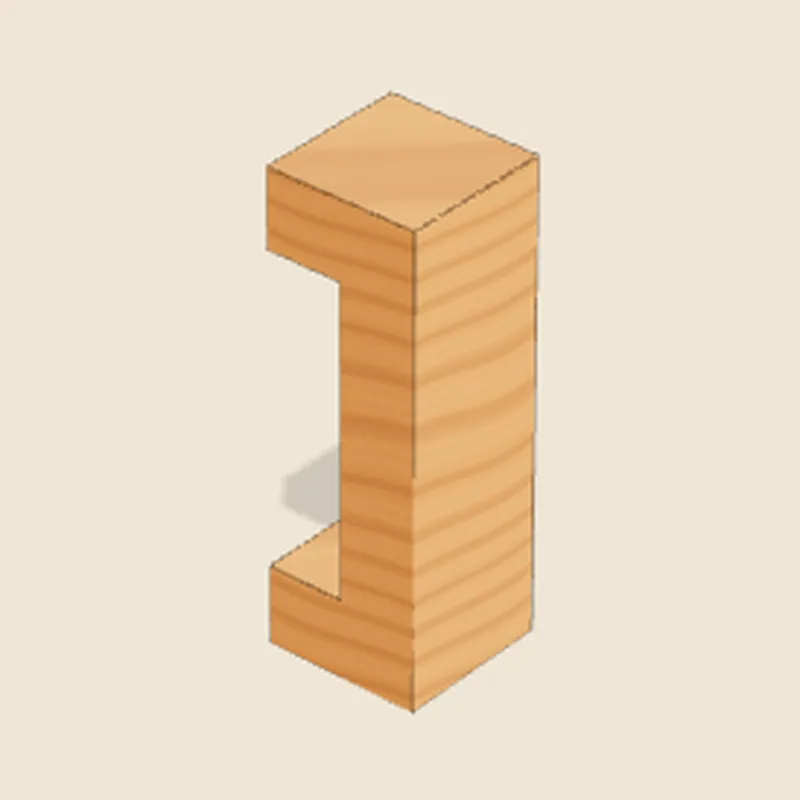
1. Seat piece 256 — Stand the first notched stick. Everything else builds around it. 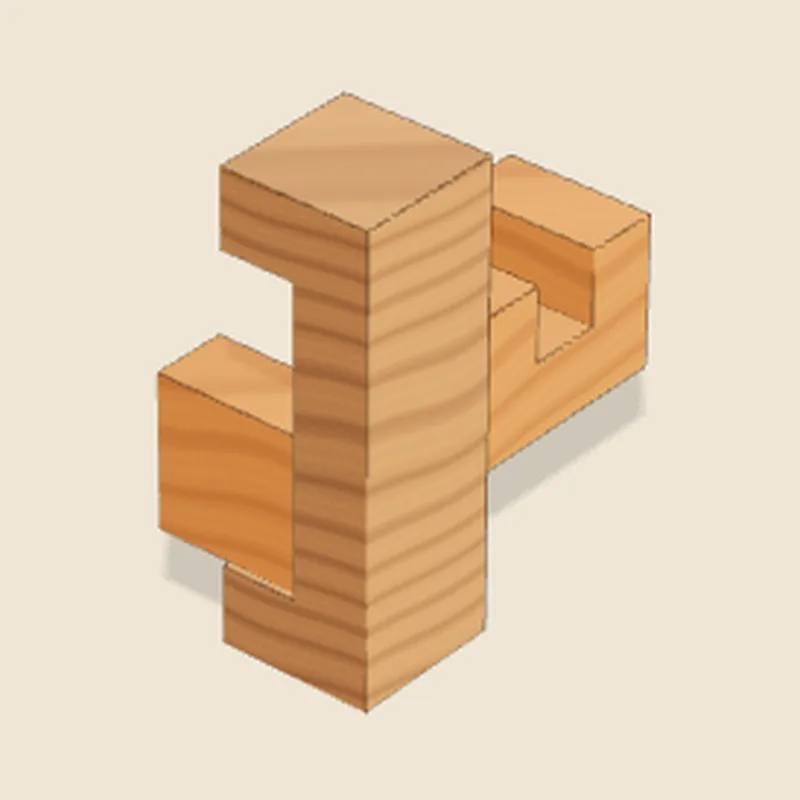
2. Slide piece 928 home — Slide it along its length into the open tunnel. 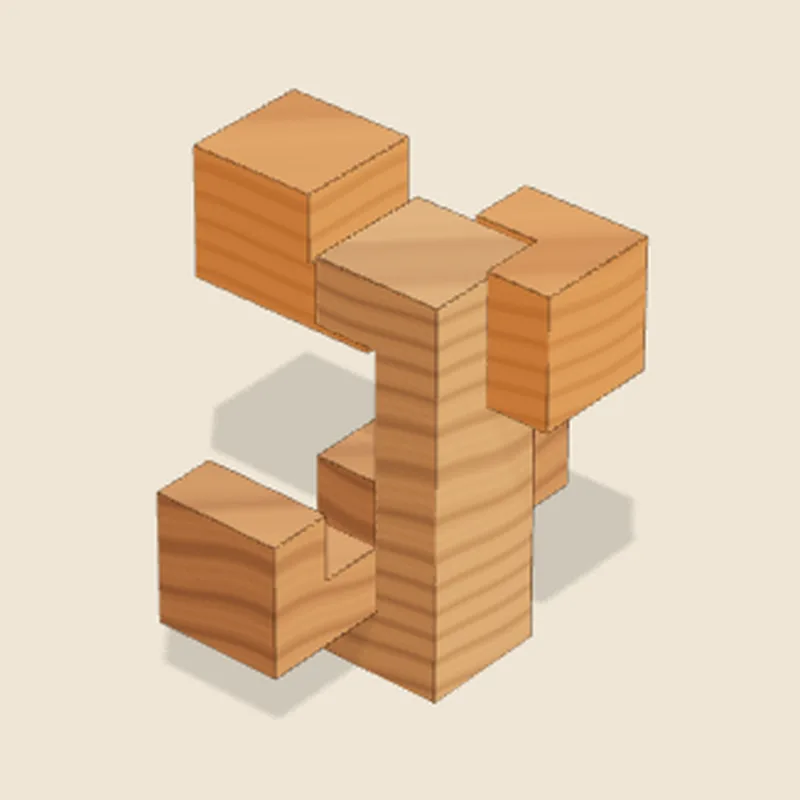
3. Push piece 824 home — Push from the side until the notches seat. 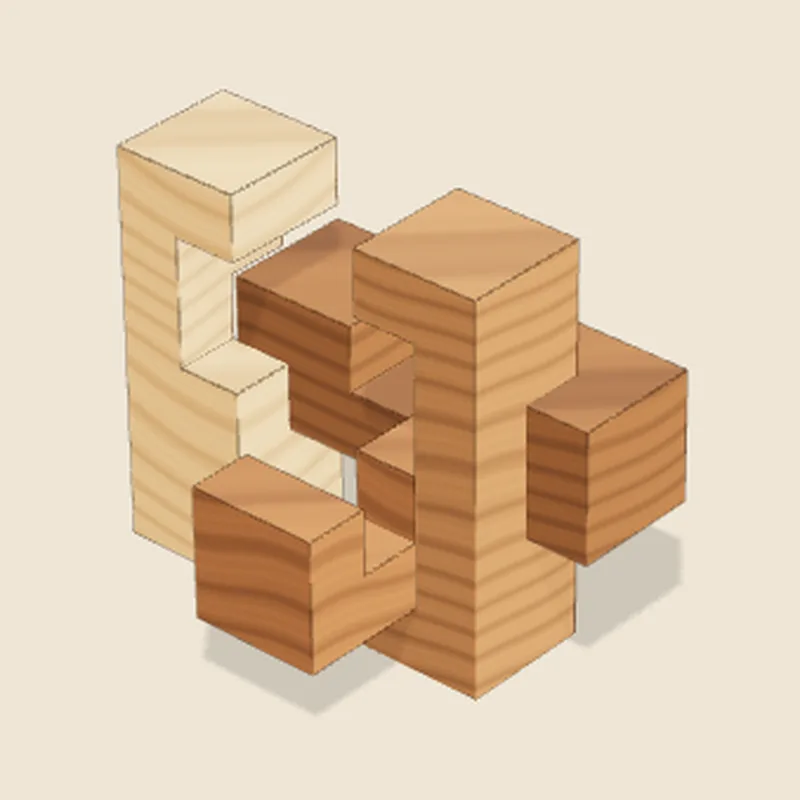
4. Lower piece 975 home — Drop it straight down into the crossing. 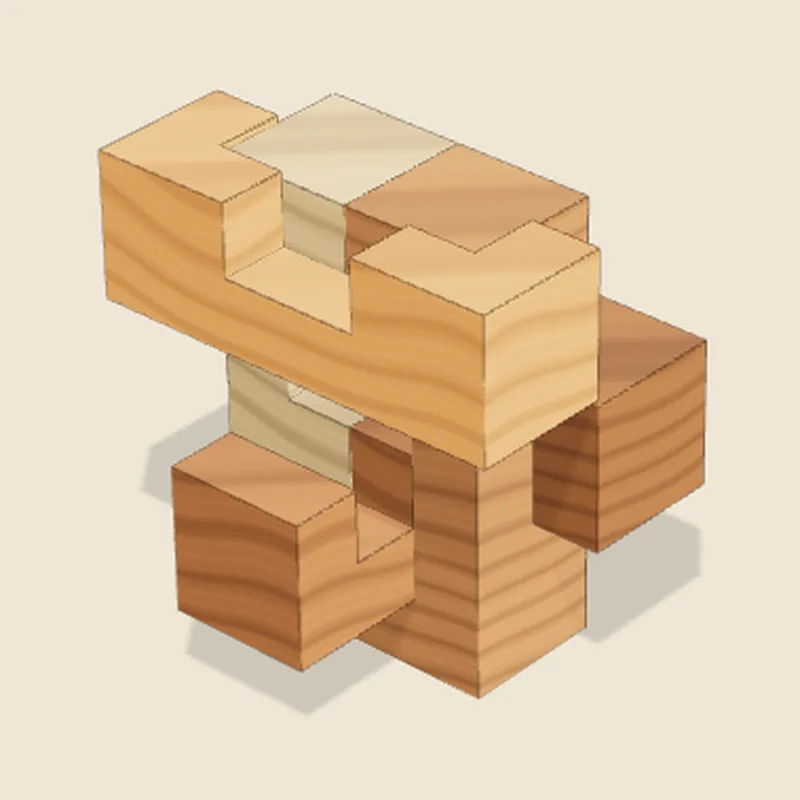
5. Push piece 1024 home — Push from the side; five sticks now leave the key channel. 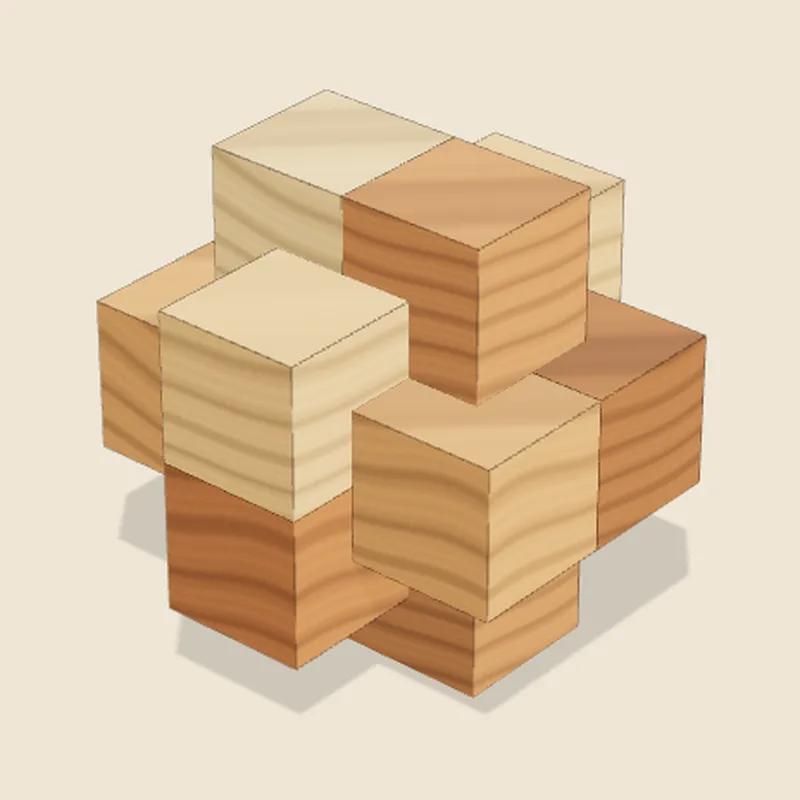
6. Slide the key (piece 1) home — Last: the unnotched stick. The knot locks.
For the interactive take-apart, the same six diagrams, and free STL files, open the six-piece solution page.
Types by piece count
Piece count is the usual way folk names are told apart. Open a dedicated page where this site has a working model; three-piece forms and the large pineapple are listed without inventing geometry.
| Pieces | Type | On this site |
|---|---|---|
| 3 | Three-piece / 三柱 (beginner form) | No dedicated page yet — listed in the atlas |
| 6 | Six-piece / 六柱 (Chinese cross) | Solution, 3D & STL |
| 9 | Nine-piece / 九柱 | 3D & STL |
| 12 | Twelve-piece / 十二柱 (Altekruse) | 3D & STL |
| 24 | Twenty-four / 二十四柱 | 3D & STL |
| 9 | Small pineapple / 小菠萝 | 3D & STL |
| 33 | Large pineapple / 大菠萝 | Listed only — no printable model yet |
What a Luban lock is
A burr puzzle is made of notched sticks that fit together into one three-dimensional knot. In China these puzzles are called Luban locks and are traditionally attributed to Lu Ban; where they began is not known. The earliest known picture of a six-piece burr is in Sébastien Leclerc’s engraving of 1698; Berlin toy catalogues sold one from 1785, and a six-piece burr appears in Tang Yunzhou’s Chinese book of magic tricks of 1889.
Six sticks (or more) occupy three axis directions. Notches nest inside the crossing; once the last piece is home, none can leave until the right one moves first. That mutual locking is the same idea that runs through Chinese joinery.
Large pineapple (大菠萝, 33 pieces)
The large pineapple is a thirty-three-piece lock of the same folk family as the small pineapple — several stick types around a long core, often counted as types that sum to 33. Public tutorials agree on that count; the last piece typically turns as it seats. A printable model is not ready yet. Other folk names are in the atlas.
Named variants
The atlas Luban section lists thirteen folk names. Dedicated pages are linked in the types table above. 三八结, 十四阿哥锁, 六方锁, 十八插钩锁, 四季锁, 姐妹球, 孔明连环锁 — listed by name in the atlas only.
Furniture joinery: learning path, joint types, or a whole piece such as the waisted square table.
Not a furniture joint
A Luban lock is a featured interlocking puzzle series. It teaches mutual locking by hand. It is not a structural joint of furniture or of a timber-frame building. For furniture and hall joinery, start with the beginner guide or joint types.