
High-waisted table
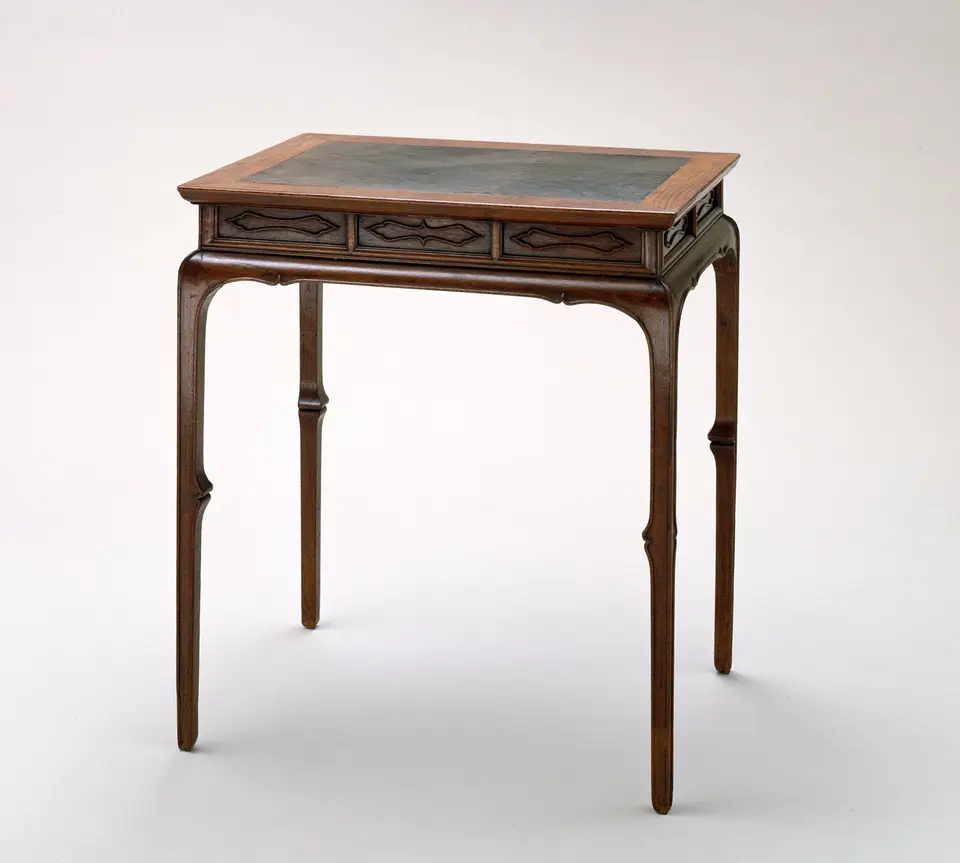
In a high-waisted table (高束腰) the recessed band under the top is raised into a tall zone of short posts and panels. The upper shoulders of the legs show on the outside. Here is what holds it together, from the top down.
1Top frame and panel
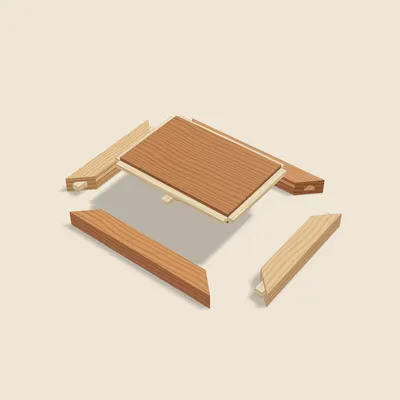
Mitred frame grooved for a floating panel — wood or, on some incense stands, stone — with battens underneath.
Frame and Floating Panel
cuánbiān dǎcáo zhuāngbǎnA mitred frame grooved on the inside, a thin panel with a tongued edge floating in the groove, and battens underneath.
Explore the joint →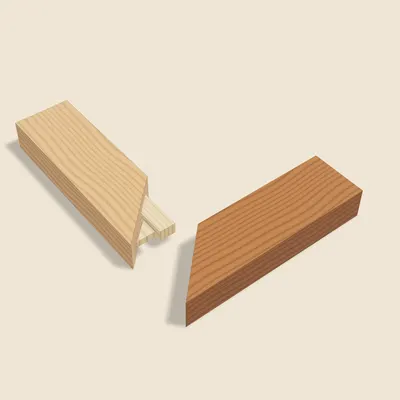
Mitred Frame Joint
géjiǎo sǔnThe 45° corner of every Chinese frame-and-panel top: a tenon through the end plus a little triangular tongue.
Explore the joint →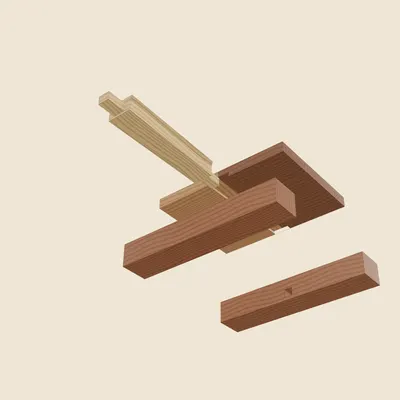
Sliding Dovetail Batten
chuāndàiA tapered dovetail batten driven across the back of a panel, its ends tenoned into the frame: the reason old tabletops stay flat.
Explore the joint →2High waist
The tall waist is divided by short posts; panels sit in grooves between them, the leg, the ledge and the top.
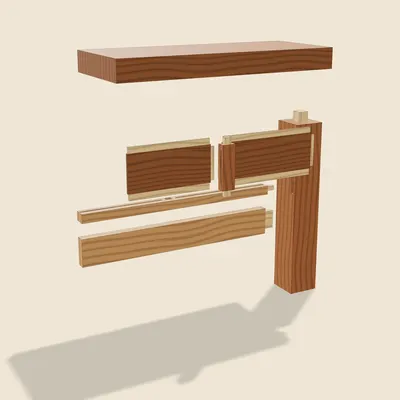
High Waist with Panels
gāo shùyāoThe waist under the top is made tall: the leg runs up through it, short posts divide it into bays, and panels sit in grooves between them.
Explore the joint →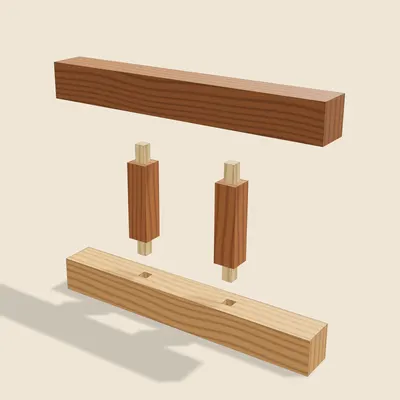
Short Struts
ǎilǎoShort vertical struts between a stretcher and the member above, tenoned at both ends.
Explore the joint →3Ledge, apron and leg
Below the waist a ledge and apron tenon into the leg; at the corner the same shoulder logic as a baojian joint keeps the faces flush.
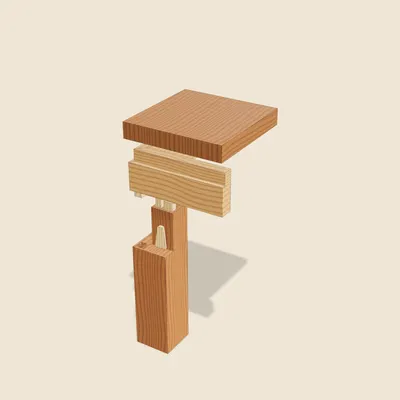
Baojian Joint
bàojiān sǔnThe hidden lock behind every waisted Ming table corner: a mitred shoulder, a triangular tenon and a tapered pin.
Explore the joint →High Waist with Panels
gāo shùyāoThe waist under the top is made tall: the leg runs up through it, short posts divide it into bays, and panels sit in grooves between them.
Explore the joint →4Leg into the top
The leg runs up through the waist and its top carries long and short tenons into the underside of the frame.
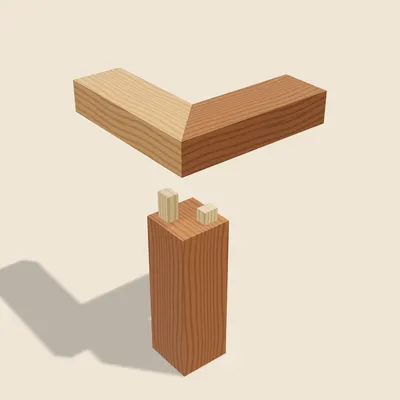
Long-and-Short Tenons
chángduǎn sǔnTwo tenons at right angles on the top of a leg: a long one for the long side, a short one for the end.
Explore the joint →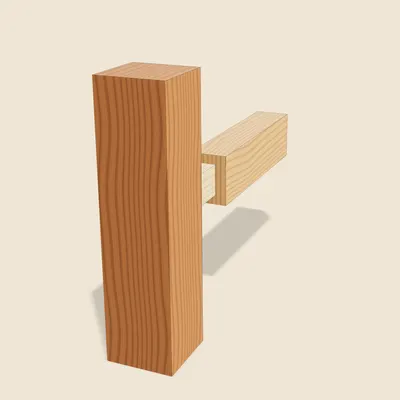
Blind Tenon
bàn sǔnThe tenon stops inside the post, so nothing shows on the outside: neat, a little less strong than a through tenon.
Explore the joint →The object in the museum
- Title
- High-Waisted Table
- Date
- late 16th century
- Material
- Huanghuali hardwood and burlwood
- Dimensions
- 87 × 76.84 × 55.25 cm
- Collection
- Minneapolis Institute of Art · 96.124.3a,b
According to the museum, this small table on delicate legs recalls earlier softwood incense stands of the Song and Yuan, usable indoors or out; a concealed drawer could hold incense tools, and the piece could also display flowers or antiques. On Ming high-waisted tables the shoulders of the corner legs are exposed and stand out from the galleried sides with their inset carved panels.