
Everted-end altar table
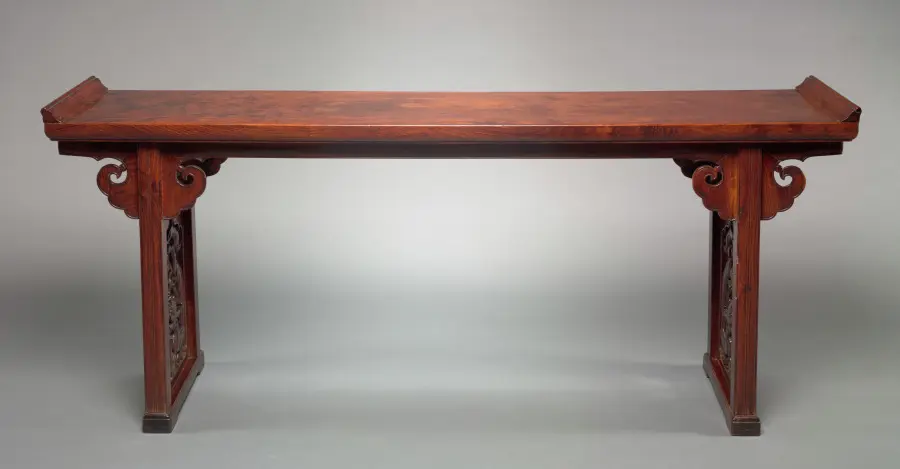
A qiaotouan (翘头案) is a recessed-leg long table whose top ends turn up. The legs stand in from the ends, cloud-shaped spandrels brace the apron, and openwork panels often fill the space between the leg pairs. Here is what holds it together.
1Top and everted ends
A long top — framed panel or thick board — with upturned end pieces; thick boards may take a mitred end strip.
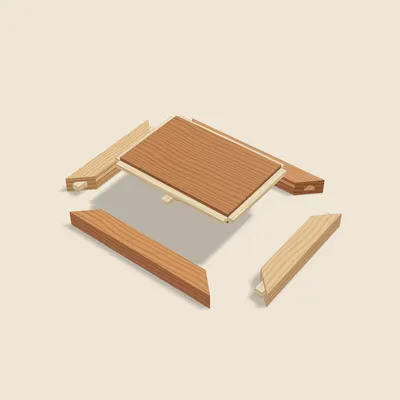
Frame and Floating Panel
cuánbiān dǎcáo zhuāngbǎnA mitred frame grooved on the inside, a thin panel with a tongued edge floating in the groove, and battens underneath.
Explore the joint →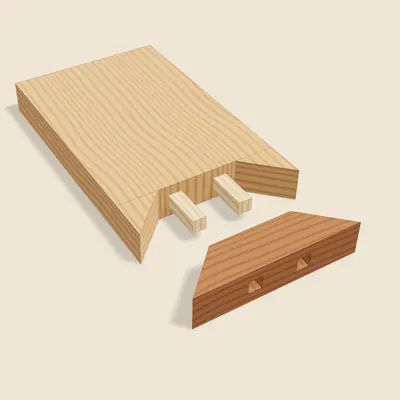
Breadboard End
pāi mǒtóuA cross-grain strip mitred and tenoned onto the end of a thick board: no end grain shows, and the board resists splitting.
Explore the joint →2Leg tops and aprons
The recessed legs are slotted to clamp the apron and cloud-shaped spandrels (jiatou), or receive a notched apron (chajian).
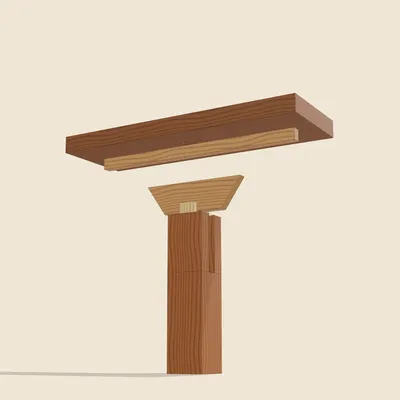
Elongated Bridle Joint
jiātóu sǔnThe leg top is slotted to clamp the apron and its spandrel heads, then tenons into the top.
Explore the joint →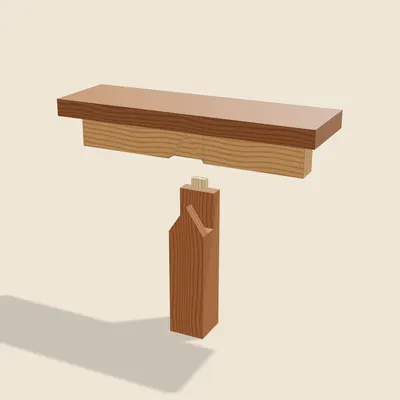
Inserted-Shoulder Joint
chājiān sǔnThe leg is cut to a pointed shoulder that the grooved apron straddles, finishing flush; the heavier the top, the tighter it grips.
Explore the joint →3Leg into the top
Tenons on the leg tops go into blind mortises under the top.
4Side panels and stretchers
Openwork panels between the leg pairs tenon into the apron and the base stretcher; stretchers meet the legs with ordinary T-joints.
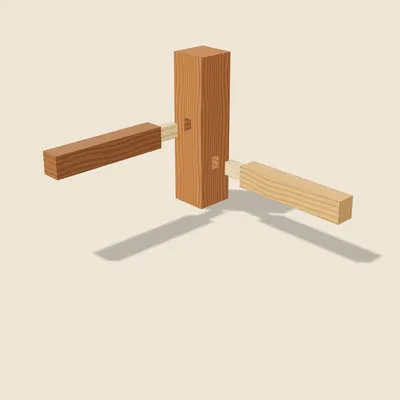
Staggered Stretchers
gǎn chéngStretchers from the front and side meet a leg at different heights, so their mortises never weaken it at one spot.
Explore the joint →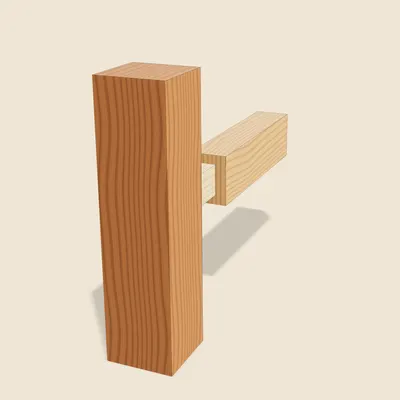
Blind Tenon
bàn sǔnThe tenon stops inside the post, so nothing shows on the outside: neat, a little less strong than a through tenon.
Explore the joint →The object in the museum
- Title
- Side Table
- Date
- 1600s
- Material
- Rosewood (huanghuali)
- Dimensions
- 86.4 × 199.4 × 41.9 cm
- Collection
- Cleveland Museum of Art · 1964.229
The museum notes that long rectangular tables were often placed against a wall to hold candlestands, flower vases or incense burners, with ancestor portraits or seasonal paintings hung above. The high legs show stylised cloud-shaped spandrels, and at each end, between the recessed legs, are carved openwork panels with a lively dragon motif.