Long-and-Short Tenons (长短榫) at the Table Leg
Changduan sun
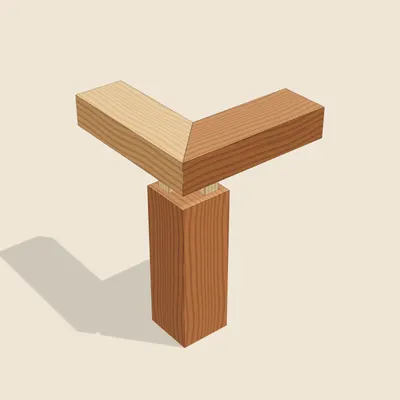
Lift the top off an old Chinese table and look at the leg. It does not end in one fat tenon. It ends in two small ones, set at right angles, and one is visibly longer than the other.
That is the long-and-short tenon. It solves a crowded corner: the leg, the long side of the top frame and the end of the frame all meet in the same few square centimetres, and the frame already has its own joint there.
- Chinese
- 长短榫 · chángduǎn sǔn
- Joins
- Leg to the top frame
- Found in
- Stools, square and long tables, waisted and unwaisted
- Signature parts
- One long tenon · one short tenon, at right angles
How it works
A crowded corner
A Chinese table top is a frame: two long sides (大边) and two ends (抹头), mitred at the corners, with the long sides tenoned into the ends. Right under that mitre is where the leg has to go in.
Two tenons, two depths
So the leg top is split into two tenons at right angles. The underside of the frame gets two mortises: a deep one in the long side and a shallow one in the end. The deeper mortise sits in the long side, and the shallower one in the end, so they stay clear of the long side’s tenon running into the end.
Part of a bigger joint
You rarely see long-and-short tenons alone. On a waisted table they crown the baojian joint; on four-sides-flat pieces they sit inside the zongjiao corner.
How it's made
 Step 1
Lay out both tenons
Mark two tenons on the leg top, at right angles to each other, one running with the long side and one with the end.
 Step 2
Cut the long tenon
Saw and pare the tenon that runs along the long side. It is the longer of the two.
 Step 3
Cut the short tenon
Cut the tenon that runs along the end, shorter than the first.
 Step 4
Mortise the frame
Cut a deep mortise in the underside of the long side and a shallow one in the end, matching the two tenons.
Tip Keep the end mortise shallow so it doesn’t break into the long side’s own tenon.
 Step 5
Drop the frame on
Lower the assembled top frame onto the leg so both tenons enter together.
 Step 6
Check the corner
The leg sits right under the mitred corner of the frame.
Variations
Under a waisted corner
On waisted pieces the leg below the top also carries the baojian shoulder and pin.
In a zongjiao corner
On four-sides-flat pieces the long-and-short tenons sit inside a three-way mitre.
Can you CNC this?
Possible, with design or setup changes
The two tenons sit on the end of a long leg. A 3-axis machine may need the leg clamped upright, or the tenon faces cut from the sides in several setups. The mortises underneath the top are straightforward; round their corners or the tenon edges.
General note: a round cutter cannot leave a sharp inside corner, so every recess keeps the tool radius. Round the mating edges or add dogbone reliefs. Sloping faces, undercuts and curves may need special bits, extra setups or more axes.
Free STL downloads (one file per part)
- Leg 腿足 · changduan-sun-leg.stl
- Top frame (long side and end) 面框(大边与抹头) · changduan-sun-top-frame.stl
Proportions are illustrative, not measured dimensions. The files are unitless: scale them to suit and check fits and allowances before cutting. Each file is a closed (watertight) solid with its mortises and slots already cut, exported in its assembled position, ready to import into CAM or modelling software. Licence: CC BY 4.0 (credit: Chinese Joinery).
In museum collections
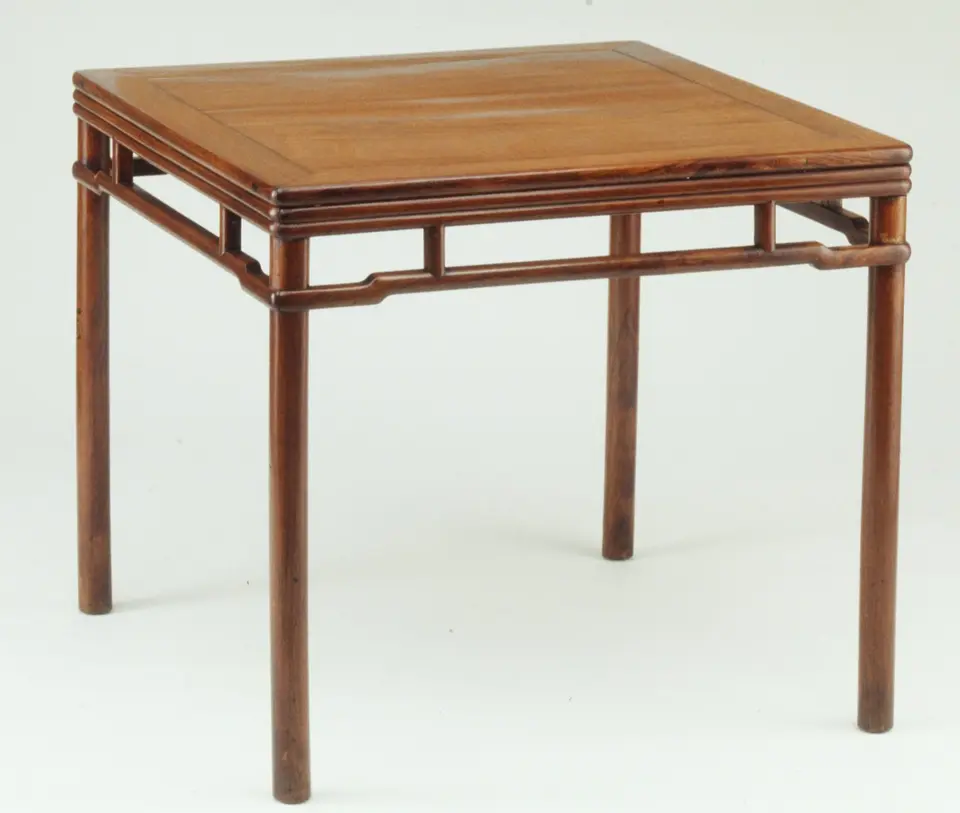
Minneapolis Institute of Art
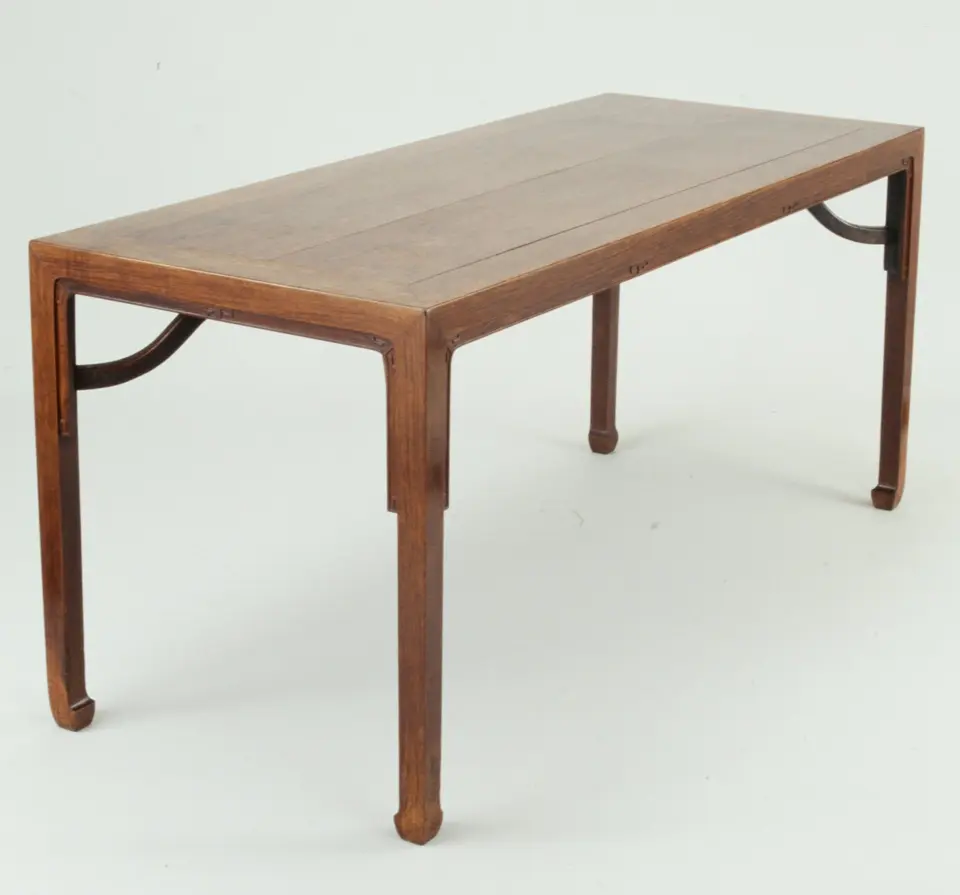
Minneapolis Institute of Art
Related joints
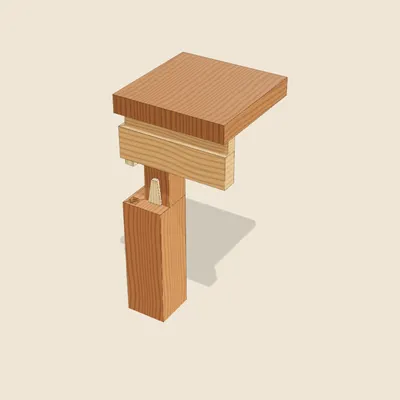
Baojian Joint
bàojiān sǔnThe hidden lock behind every waisted Ming table corner: a mitred shoulder, a triangular tenon and a tapered pin.
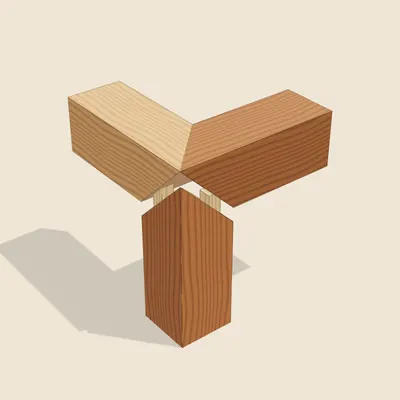
Zongjiao Joint
zòngjiǎo sǔnThree members, three 45° mitres, one perfect point: the corner joint of flush-sided tables and cabinets.
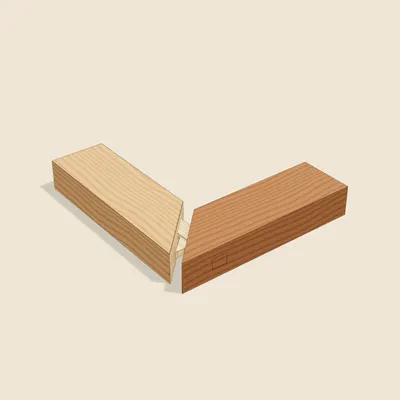
Mitred Frame Joint
géjiǎo sǔnThe 45° corner of every Chinese frame-and-panel top: a tenon through the end plus a little triangular tongue.
Questions
What is a long-and-short tenon?
Two tenons at right angles on top of a leg, one long and one short, fitting mortises of different depths in the long side and end of a table-top frame.
Why not one big tenon?
The corner of the frame already holds the long side’s tenon into the end. Two smaller tenons at different depths go around it instead of cutting through it.
Which tenon goes where?
The long one goes into the long side (大边), where the mortise is deep; the short one into the end (抹头), where it is shallow.