
Dado joint and rabbet joint
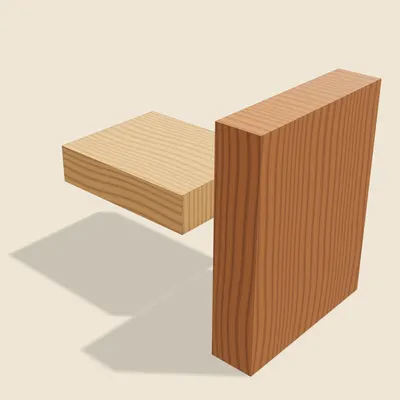
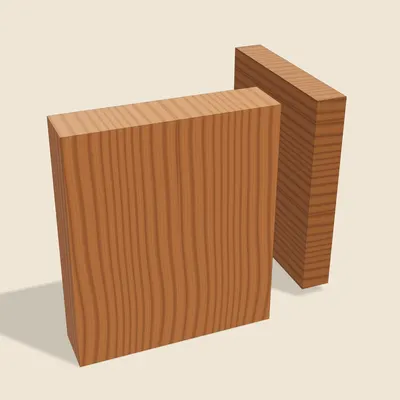
A dado is a groove across the grain that houses the end of another piece, usually a shelf. A rabbet is an open step on an edge, not a slot. One is a trench; the other is an L-shaped rebate.
Dado and rabbet, side by side
A dado has two walls and a bottom. The end of the shelf is trapped between the walls, so it cannot slide along the side.
Rabbet
A rabbet has one shoulder. The second piece sits in the step and the joint is open on the edge, which is why a back or a case corner can drop in from that side.
How strong is it?
The Wood Handbook names rabbets, with dowels and mortise and tenons, as end-to-edge joints that can be made strong (Fig. 10-8).
How to cut them
Mark from the piece that must fit. Saw a two-walled groove for a dado, or an open step for a rabbet.
- Mark the width from the piece that fits. Knife the housing from the shelf or the back itself, so the groove matches that piece rather than a remembered size.
- For a dado, saw two walls and clear the waste. The groove runs across the grain. Saw the walls, then chisel or rout the bottom flat. Stop short of the show edge if the housing should not break through.
- For a rabbet, saw the shoulder and the cheek. The waste falls off the edge. What remains is an open step, not a slot with two walls.
- Fit the mating piece. The shelf end or the back should seat without a gap at the shoulder. Glue the long-grain contact.
When to use each
Use a dado when a shelf or a divider must be located along a side and stay there. Use a rabbet when the second piece meets an edge and the joint can be open on that edge: case backs, some box corners. A mortise and tenon is the frame joint when the end is a rail rather than a wide shelf. A box joint or a dovetail is the corner when the end grain should interlock instead of sitting in a step.
The twelve Western joints, and every within-study result, are on types of wood joints. Related joints: mortise and tenon, box joint, dovetail.