
Huanghuali, the wood of Ming furniture
Huanghuali (黄花梨, huánghuālí) is the fragrant rosewood of fine late Ming and early Qing furniture: the heartwood of Dalbergia odorifera (降香黄檀). It is reddish-brown and dense; the species name odorifera means “fragrant”. This page answers the collector questions first — what the wood is, how it differs from zitan, huali and hongmu, what eye ID can and cannot prove, and which museum pieces show the grain — then maps the joints those pieces use.
The tree
Huanghuali is the wood of Dalbergia odorifera, a true rosewood in the genus Dalbergia, a small or medium-sized tree about 10–15 metres tall. Flora of China records wild trees on Hainan Island and also in Fujian and Zhejiang, on mountain slopes at 100–500 metres.
Furniture historians and museum labels usually write “huanghuali” for this heartwood in classical Chinese furniture. Botanical naming and furniture naming do not always travel together in older catalogues. The botanical anchors on this page are the Flora of China species page and the IUCN assessment cited in the references. Matching a board in hand to a species is specialist work; prefer museum accession records and the botanical sources below.
Huanghuali, zitan, huali and hongmu
Collectors often meet four overlapping names. Only one of them — huanghuali — is pinned here to a single botanical species in the sources below. The others are museum labels, trade names, or national-standard class names. Use the table as a map, not as a board-side ID key.
| Name | What it names | Botany / standard | On museum pieces |
|---|---|---|---|
| Huanghuali 黄花梨 | Furniture/trade name for the fragrant heartwood of classical hardwood furniture | Dalbergia odorifera (降香黄檀); Flora of China: Hainan, Fujian, Zhejiang, 100–500 m; tree ~10–15 m | Common label on late Ming / early Qing pieces in Cleveland and Minneapolis open records linked from this site |
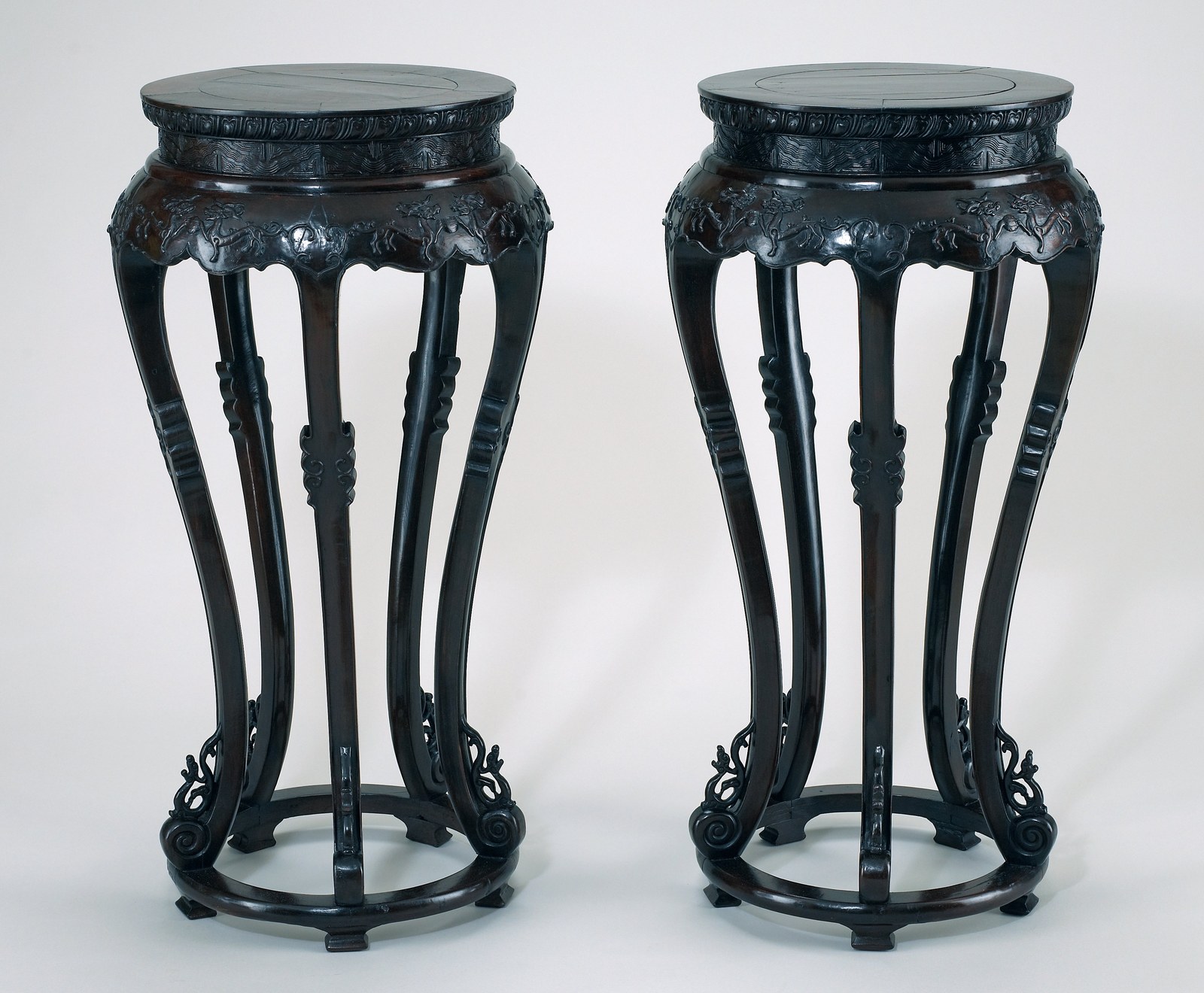
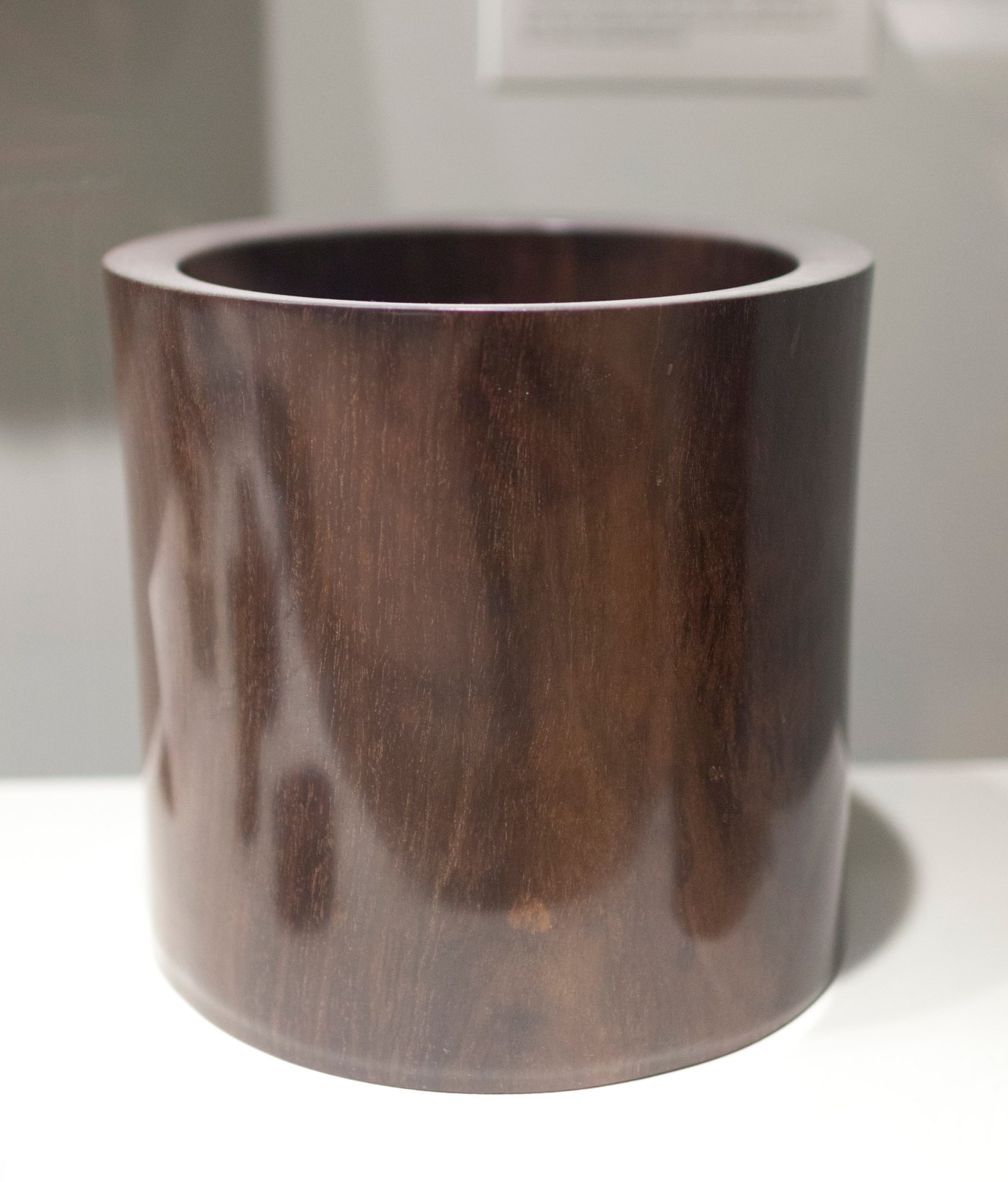
| Zitan 紫檀 | Furniture/museum wood name (“purple sandalwood” in older English) | Trade and Chinese national hardwood standards often associate classical zitan with Pterocarpus santalinus (檀香紫檀) — a different genus from Dalbergia. Museum labels write “zitan”; they do not always print a Latin binomial | Mia open-access pieces labeled Zitan (e.g. incense stand 2004.179.2.1, brush pot 97.142.3) show darker, finer-textured members than typical huanghuali cabinets |
| Huali / “flowering pear” woods 花梨 | A broader Chinese trade and standard class, not the same box as huanghuali | Under GB/T 18107-2017《红木》, “花梨木类” covers several Pterocarpus species (for example padauk-group woods). Xiangzhi / 香枝木类 (降香黄檀) is a separate class from 花梨木类 | Clear open-access museum furniture photos labeled simply “花梨” with a free licence are scarce; this page does not retag huanghuali photos as huali |
| Hongmu 红木 | A Chinese national-standard / market class name — not one tree | GB/T 18107-2017 defines hongmu as five genera, eight classes, twenty-nine species. Huanghuali (香枝木) and several zitan/huali classes sit inside that umbrella | When a dealer says “红木家具”, ask which class and which species record they mean |
Short rule: follow the accession label for the object in front of you; follow Flora of China and GB/T 18107-2017 for how names nest; do not promote a reddish board to huanghuali by colour alone.
How to identify — and what eye ID cannot prove
Identification questions fall into three layers: the botanical species, the furniture trade name on a museum label, and the national-standard class used in Chinese hardwood commerce. Confusing the three is how myths spread.
Is huanghuali the same as huali?
No. Huanghuali in the botanical sense used here is Dalbergia odorifera (香枝木 / 降香黄檀 in the GB/T 18107-2017 class language). “花梨木类” in that standard is a Pterocarpus class. Shared characters in Chinese market speech do not make them one species.
What does CITES cover?
Dalbergia spp. are listed in CITES Appendix II (with Appendix I exceptions for certain species). That listing covers international trade controls for the genus; it took effect for the broad Dalbergia listing after CoP17 (effective 2017-01-02 in the CITES timeline). Pterocarpus santalinus, often tied to classical zitan in trade writing, is also Appendix II, under its own annotations — keep the two listings separate when you read a permit.
CITES paperwork tracks legal trade. It does not by itself prove that a particular polished board is D. odorifera.
What can you see by eye?
Warm reddish-brown heartwood, density, and figured or swirling grain appear on many museum huanghuali pieces photographed below. Closely related Dalbergia woods and some Pterocarpus woods can look similar under varnish. Without microscopy, chemistry, or a documented chain of custody, write what the museum wrote — “huanghuali”, “zitan”, “hardwood” — and stop there.
Why is the wood rare?
The tree was heavily cut in the twentieth century. The IUCN Red List still carries the 1998 Vulnerable assessment. A 2025 field study of the wild Hainan population counted about 200 trees, only around 30 mature, and argued the species meets Critically Endangered criteria under IUCN rules — that paper’s conclusion, not a replaced official Red List status. Large furniture-grade trees are scarce; other Dalbergia species have been cut as substitutes.
Figured and swirling grain
Collectors often hunt for dramatic figure in the heartwood — tight swirls, “ghost-face”-like patches, and lively contrast between darker and lighter zones. Museum labels on the open-access pieces below do not print the Chinese trade nickname 鬼脸纹. What you can verify is the photograph: knot-adjacent swirl on a kang-table corner, dense figure on a small box lid, broad ribbon stripe on a cabinet door.
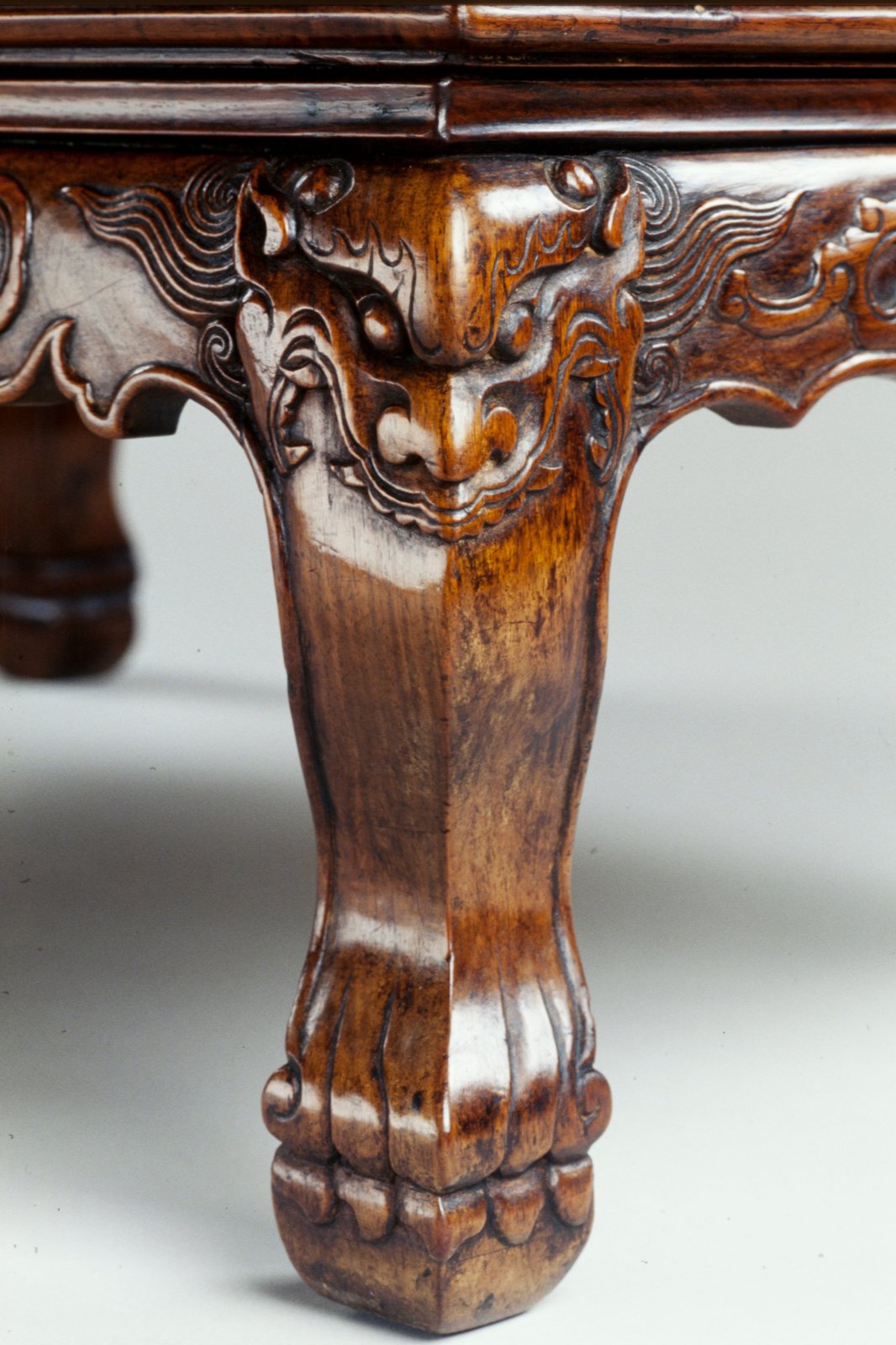
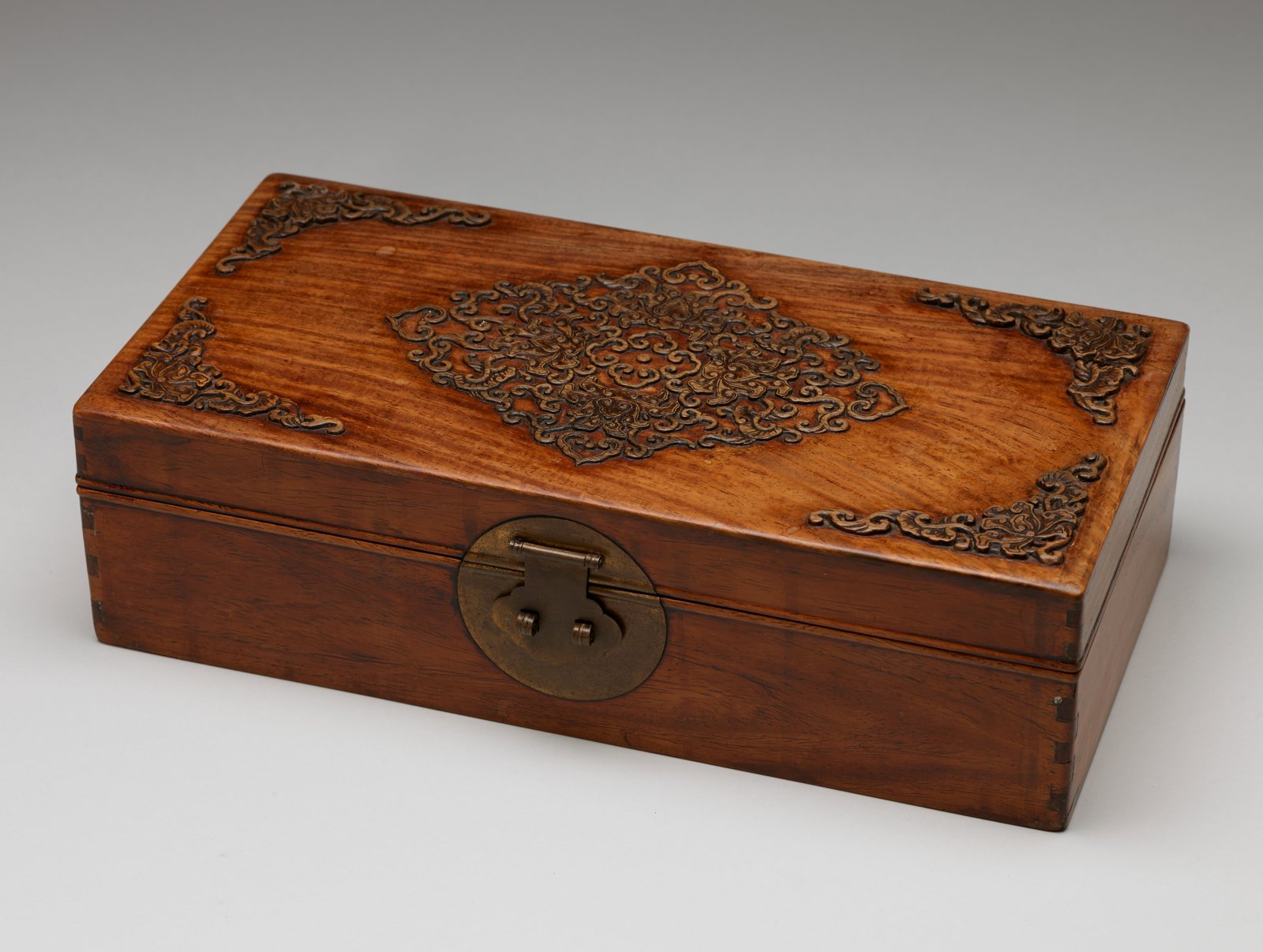
Figure is a reason people photograph the wood. It is not a species certificate. Treat dramatic grain as a visual note on a labeled piece, then follow the joint map if you care how the corner is built.
In Ming and Qing furniture
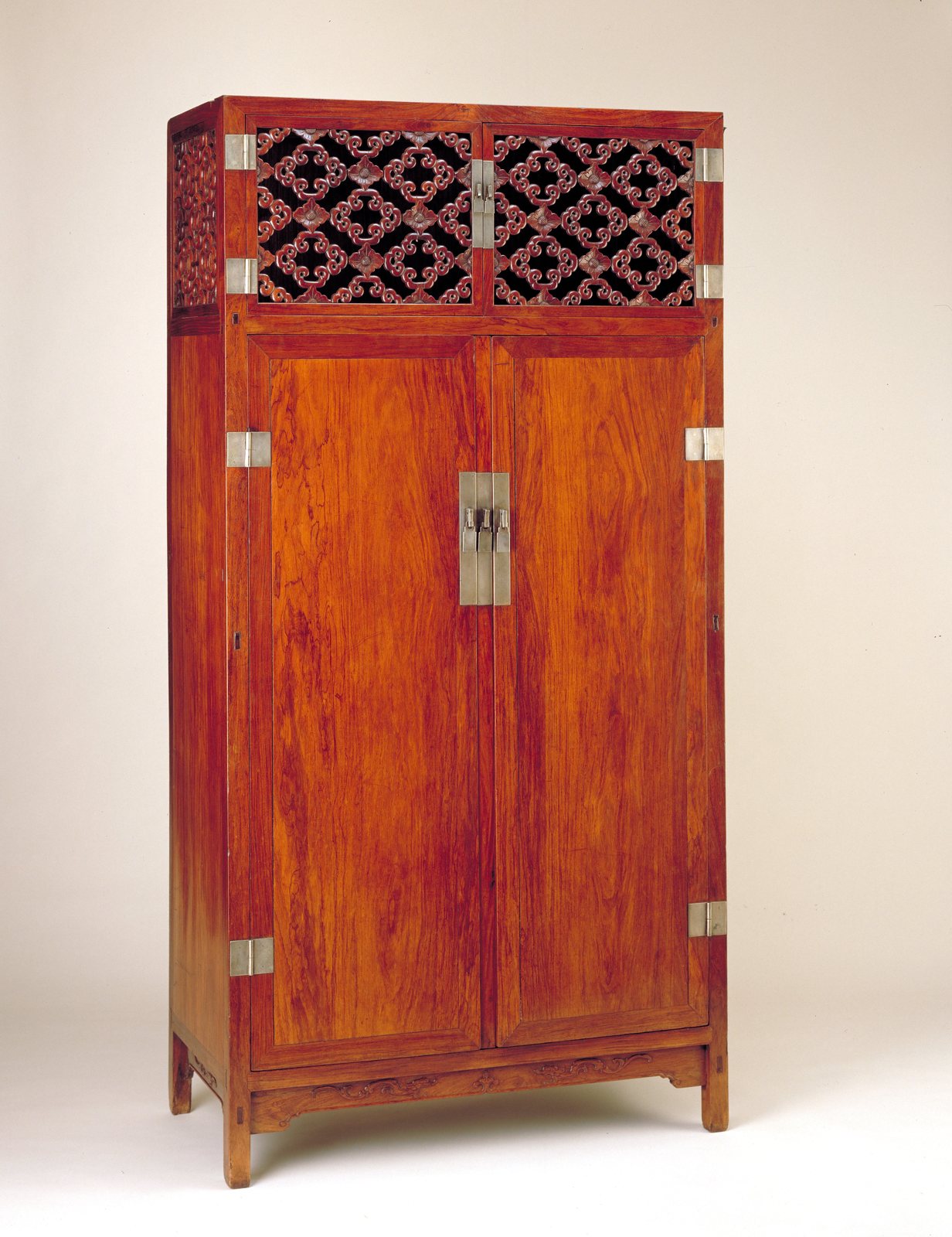
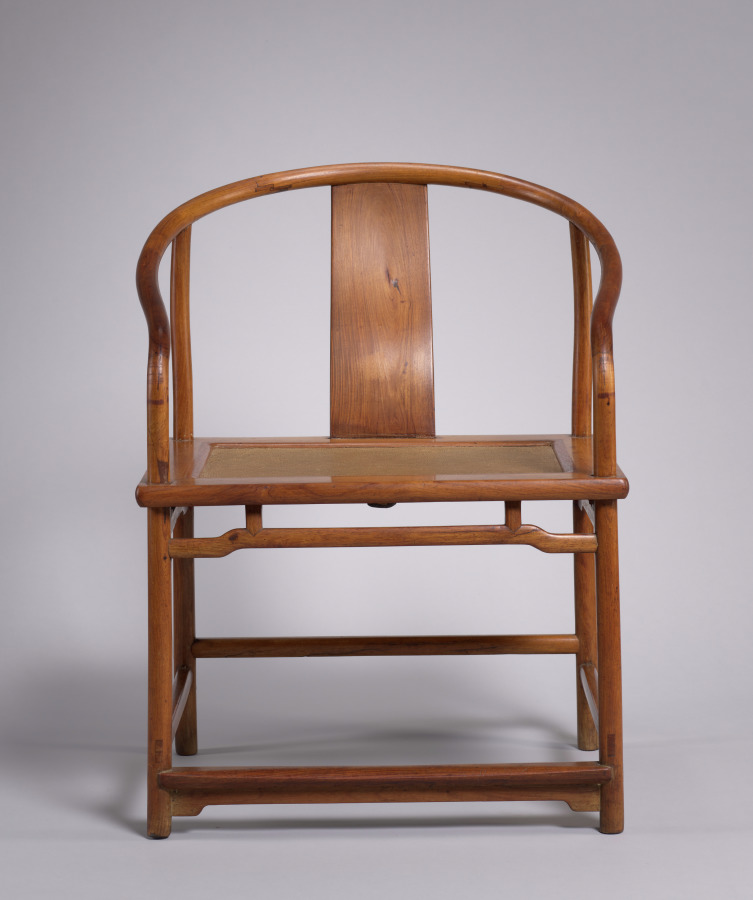
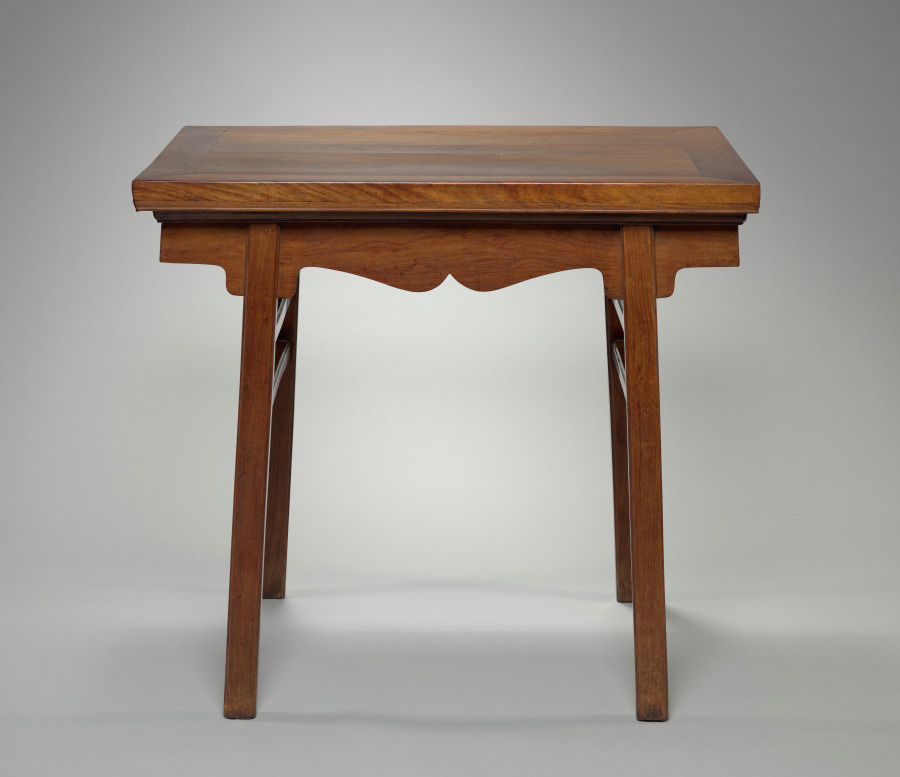
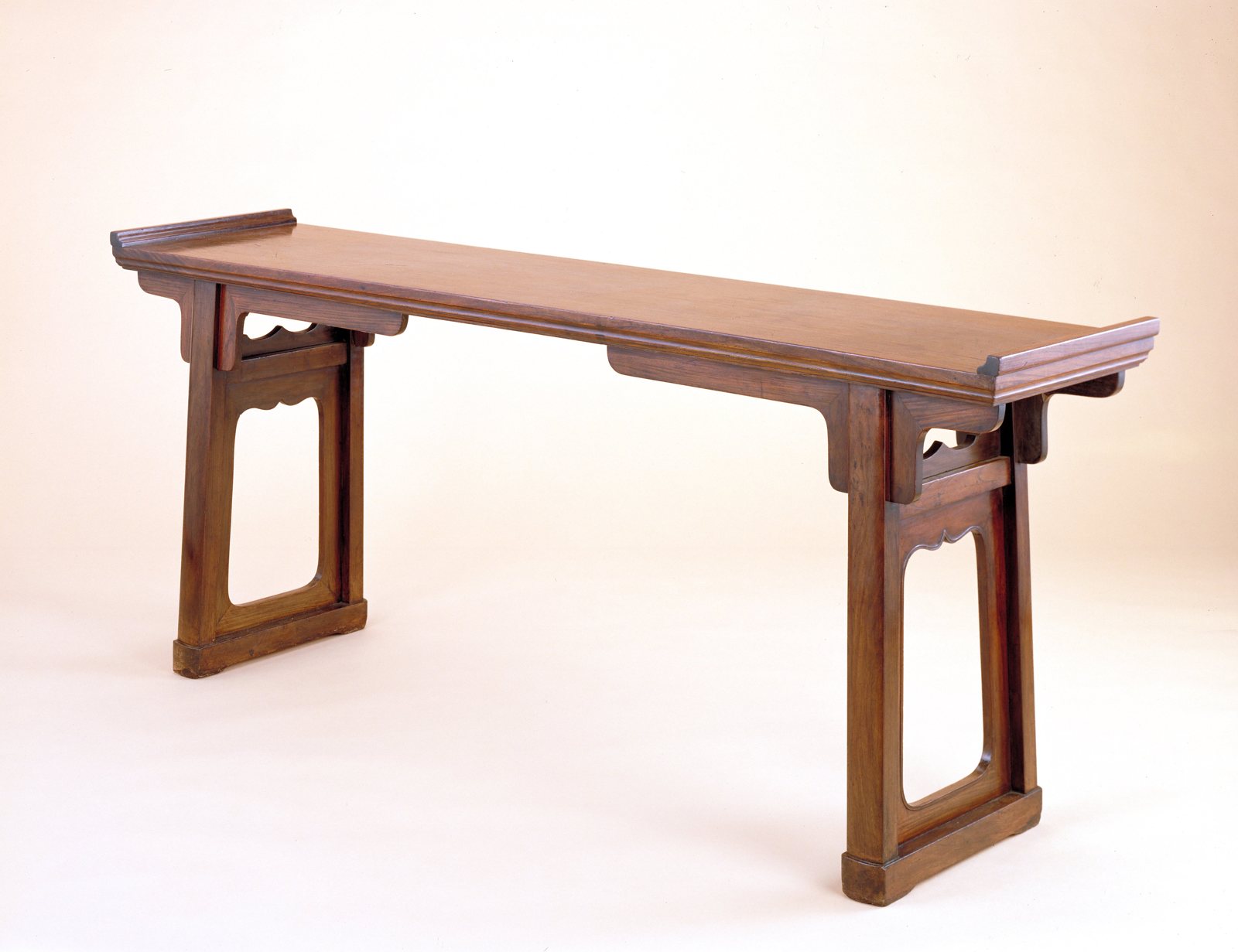
The wood was used for furniture in the late Ming and early Qing. Museum records describe many surviving pieces as huanghuali, among them the roundback armchair, the kang table and the altar table in Cleveland, and the kang table and square-corner cabinet in Minneapolis. The Minneapolis cabinet is huanghuali throughout, even its back and top panels; only the interior shelves are softwood. The Cleveland kang table record notes that by the Ming and Qing, furniture makers used rare tropical hardwoods such as huanghuali.
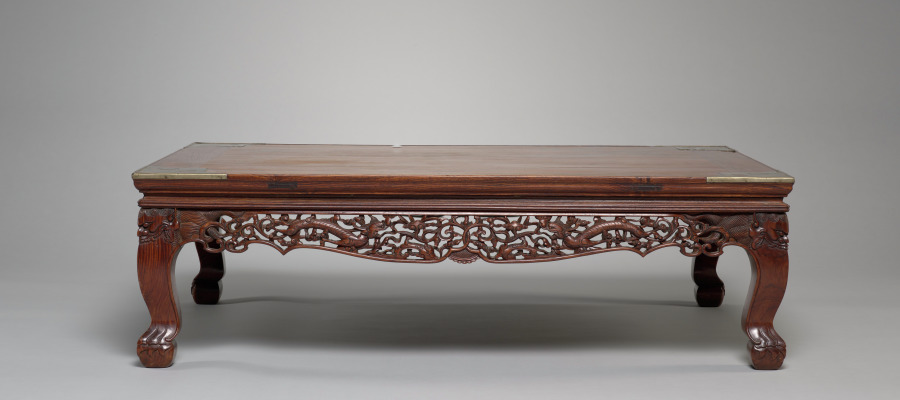

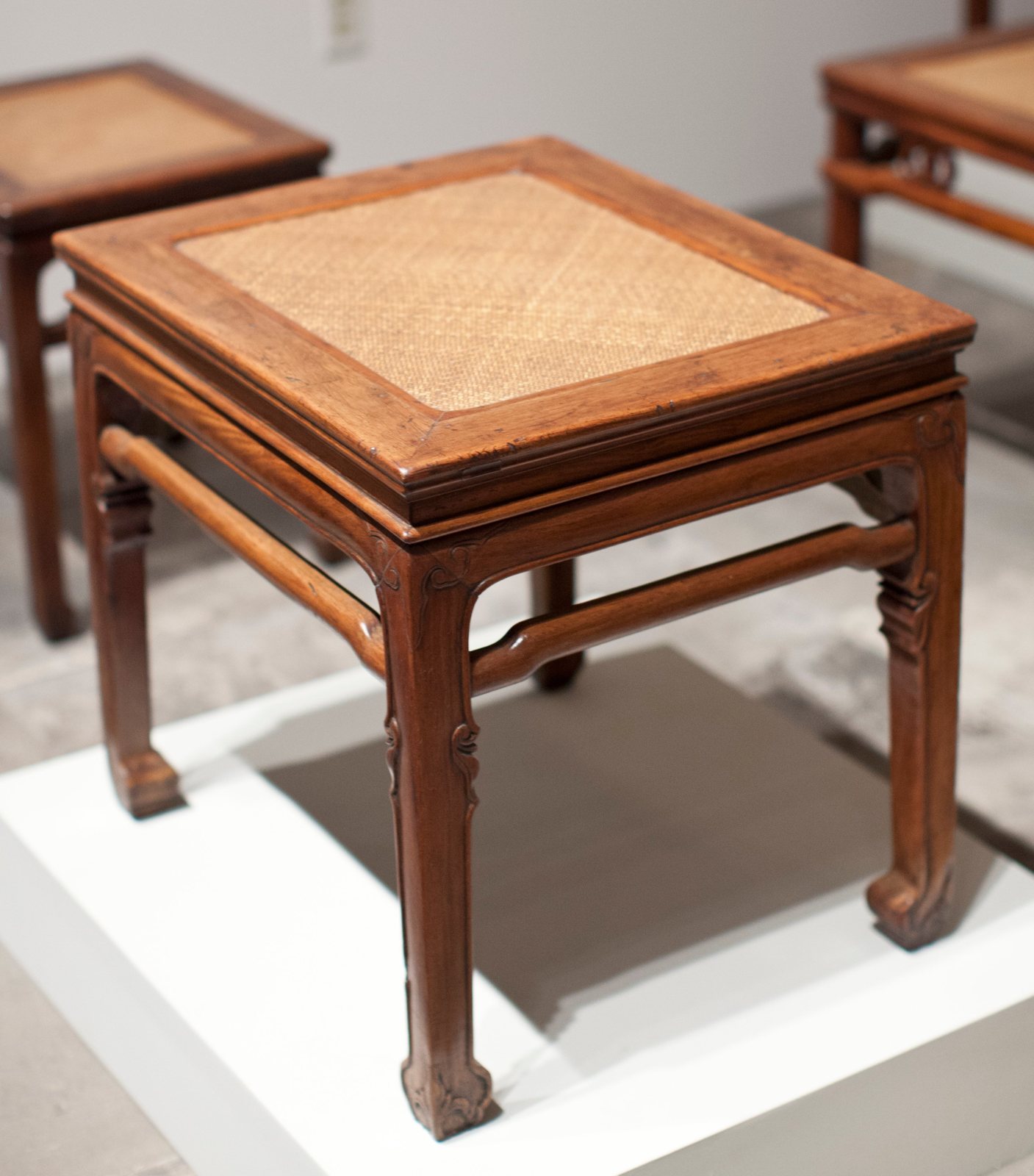
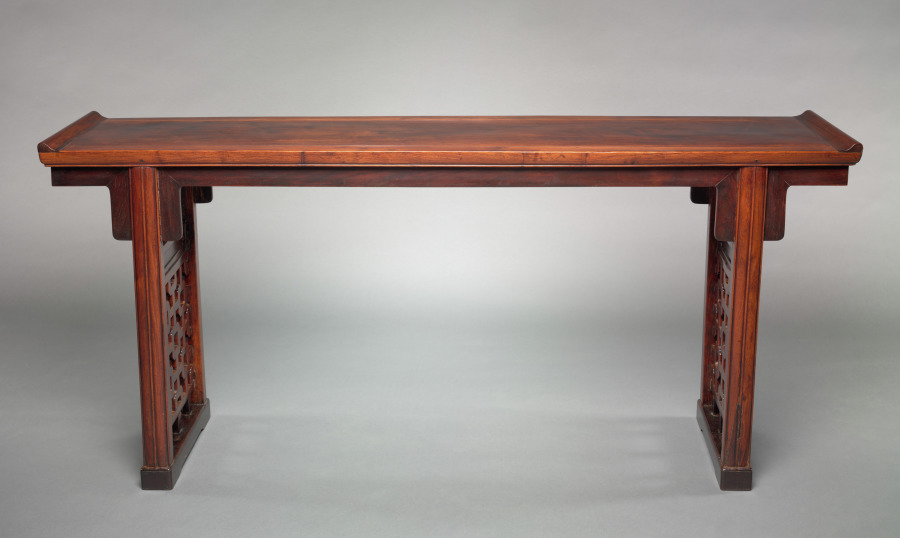
Those pieces show the same structural vocabulary as other Ming hardwood furniture: mitred frames with floating panels, waisted or recessed-leg corners, and members shaped so the joint is part of the line. Style notes sit in characteristics of Ming furniture; joint families sit in the beginner guide.
Wang Shixiang’s furniture studies — listed on the further reading page — treat huanghuali as the signature hardwood of many late Ming and early Qing forms without turning the books into a timber-ID manual. When a museum label and a popular article disagree on the wood name, follow the accession record; then use this hub’s joinery map to see how the corner is built.
Other whole pieces on the furniture index show the same corners in different silhouettes: a low kang table puts baojian geometry close to the eye; a tall cabinet asks you to read zongjiao lines vertically; a recessed-leg altar table shows why the clasping leg exists — to grip a long apron under a top that overhangs past the legs.
Joinery you will meet on huanghuali pieces
Huanghuali furniture uses the same joints as other classical hardwood pieces; the wood does not invent a separate system. On waisted tables and stools, look for the baojian joint at the corner of leg, waist and apron, with long and short tenons into the top frame and often a S-shaped brace underneath. Recessed-leg painting and altar tables use the clasping-leg joint or the inserted-shoulder joint. Flush-sided tables and square-corner cabinets meet at the three-way mitre.
Tops and doors are almost always mitred frames with floating panels, stiffened by dovetailed battens. Chair arms may use the wedged scarf; drawer and box corners may show dovetails or related forms. Each of those pages has a take-apart model — the fastest way to see what a huanghuali corner is doing under the polish.
Roundback chairs add their own map: the curved arm may use a wedged scarf, while legs and soft panels still depend on tenons and floating frames. Follow the armchair furniture page for the zone list, then each joint for the 3D take-apart.
Reading a museum piece
Open-access records from Cleveland and Minneapolis, linked from the furniture pages and from the figures on this hub, typically name the wood as the museum gives it, with date range, dimensions and accession number. Those pages are the object-level source. Botanical name, scarcity citations, CITES genus listing, and the joinery map sit here.
If a label and a popular article disagree on timber, follow the museum record and the botanical and standard references listed below — and leave species disputes to specialists with microscopy or documented provenance.
For style context, stay with Ming furniture characteristics and the furniture index. For how joints avoid nails so wide panels can move, see joinery without nails.
What transfers across woods is the joinery. A waisted corner still hangs on a baojian whether the museum labels the piece huanghuali or zitan; a recessed-leg apron still seats in a jiatou slot. If you care about structure, follow joints and whole-object pages first, and treat the timber name as the museum gives it. Furniture pages among them the high-waisted table, one-leg-three-aprons table, waistless square table and everted-end altar table reuse that joint map.