
Chinese wood joinery vs Western joinery
Wood joinery is any method that locks timber so a piece stands. Chinese joinery — sǔnmǎo — is one tradition in that family, known mainly through Ming and early Qing hardwood furniture. Western shops often reach first for a different set of joints and fasteners. Here is how the two approaches differ in practice.
Common Western shop joints
In much contemporary Western furniture and cabinetry, everyday work often starts with:
- Butt joints — faces or edges meeting, held by screws, nails, or glue
- Biscuit joints — thin oval plates in matching slots, mainly for alignment while glue sets
- Pocket-hole screws — angled screws driven from a drilled pocket into the mating piece
- Dowels — round pins in drilled holes, usually with glue
- Loose tenons (Domino-style) — a separate tenon seated in mortises on both members
These methods are fast and repeatable. Strength comes mainly from glue and metal fasteners; the joint geometry is often there to locate the parts.
Ming furniture defaults
On classical Ming tables and cabinets, shaped tenons and mortises carry the load. Glue and metal fittings appear where needed (hinges, locks), but the structure is designed around interlocking wood.
Two corners make the contrast concrete:
- The baojian joint hangs an apron on a tapered pin under a recessed waist; assembly itself tightens the corner.
- The zongjiao (three-way mitre) brings three members flush to one point. Western cabinetmaking has a related three-way mitre (e.g. Andrew Hunter in Fine Woodworking #227); same visual idea, different tradition.
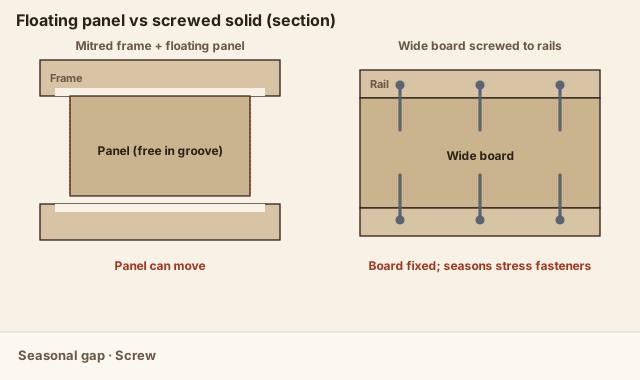
Tops are usually mitred frames with floating panels, so wide boards can move with the seasons instead of being screwed tight to a carcass.
Geometry vs hardware
Side by side:
- Modern Western defaults: align with biscuit or Domino, fasten with pocket screws or dowels; glue and fasteners take the load.
- Ming structural defaults: cut members so they interfere under pull — hanging pins, through or blind tenons, dovetails, mitred frames — and assemble in an order that locks the piece.
A pocket-screw cabinet can be strong in an afternoon. A baojian corner takes more layout time and yields a joint you can read as line and take apart for repair. Same craft family; different load path.
Load path: interlocking geometry vs hardware and glue
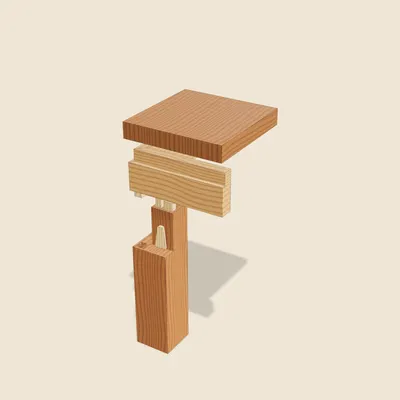
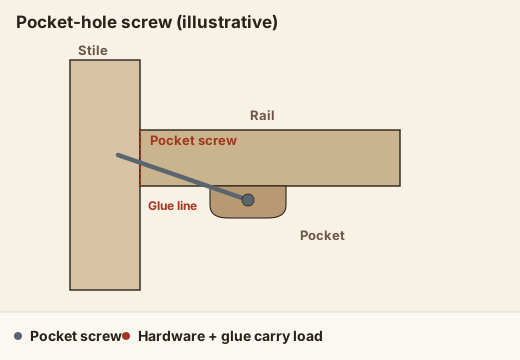 Western shop Pocket-hole screw
Corner: three-way mitre vs butt and screws
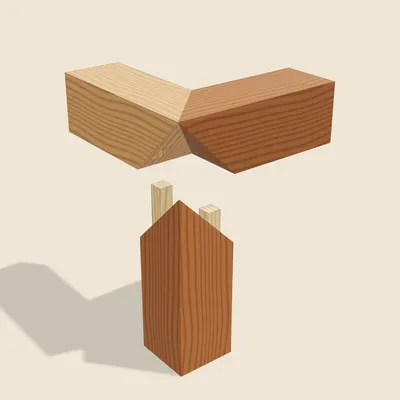
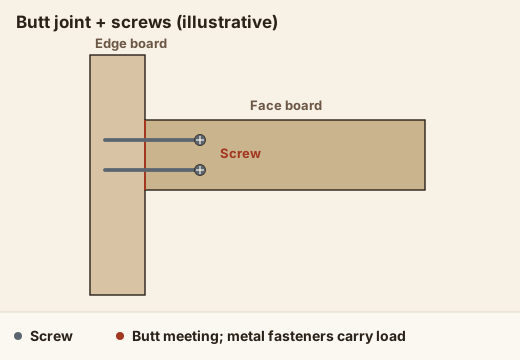 Western shop Butt joint + screws
Panel: floating in a frame vs screwed solid
Nails, glue, and metal
Classical Chinese furniture uses metal hinges and fittings on cabinets; some joints take glue. Western fine work still uses hand-cut dovetails and mortise-and-tenon when the piece needs them. The useful contrast is what each tradition treats as the primary load path: shaped wood in Ming hardwood furniture as Wang Shixiang described it; screws, biscuits, and glue in much Western production work.
Recessed-leg tables and floating panels
A second Ming habit shows the same contrast without repeating the corner list. On a recessed-leg table the apron is clasped by the leg — see jiatou or the look-alike chajian — so the long top can overhang past the legs. Western production cabinets often screw a solid top to rails; seasonal movement then fights the fasteners.
Floating panels in a mitred frame answer that fight: the panel’s tongue sits in a groove and can shrink or swell across the grain while the frame stays true. That is the same idea as joinery without nails, written here as a Western-shop comparison rather than a slogan. The figures on this page put a pocket-screw rail, a butt-and-screw corner, and a floating-vs-screwed section next to Ming relatives already modelled on the site.
This hub stays a bridge. It does not try to catalogue every Western joint or chase generic “wood joinery” queries; for Chinese families open the beginner guide, and for another interlocking tradition open Chinese vs Japanese joinery.
Chinese vs Japanese
Chinese vs Japanese joinery is a separate comparison — two interlocking traditions, not fasteners vs interlocking. See Chinese vs Japanese joinery.
Next
- Beginner guide — joint families
- Atlas — visual catalogue
- Baojian and zongjiao — two signature corners
- Joinery without nails — floating panels and self-locking habits
- Ming furniture characteristics — style context