
Biscuit joint
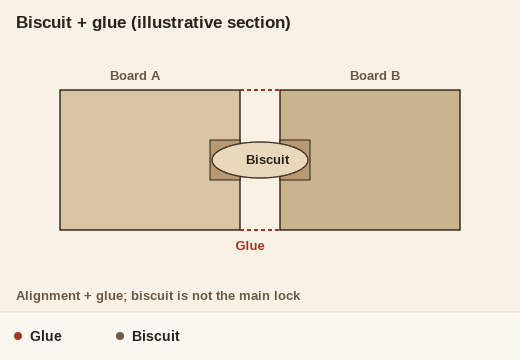
A biscuit joint glues a compressed wooden wafer into a slot in each edge. The wafer keeps the edges in line. The glue in the slots is what holds the joint.
How a biscuit joint works
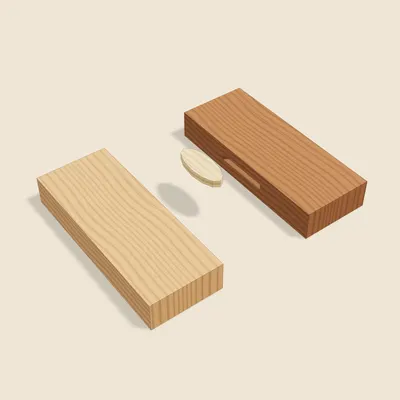
A slot is cut in each edge. The wafer spans the seam and sits in both slots. While the glue is wet the wafer stops the boards sliding along the seam and keeps the faces in one plane. After the glue has set, the glue in the slots is the connection.
How strong is it?
The joint relies on glue in the slots, and on the wafer for alignment. A dowel is a round pin in drilled holes. The dowel tests compare that pin with a mortise and tenon.
How to make one
Mark, cut two slots, glue, and insert one wafer.
- Mark the slot centers. Put the marks on both edges so the slots land opposite each other and the faces stay flush.
- Cut a slot in each edge. One wafer needs two slots, one in each piece. Cut them to the same depth so the wafer sits centered on the seam.
- Glue the slots and the edge. The joint relies on glue in the slots. Glue the edge as well if that edge is part of the glue line.
- Insert the wafer and clamp. Seat the wafer and close the seam before the glue grabs. The wafer’s job at that moment is to stop the edges sliding out of line.
When to use it
Use biscuits when two edges or a simple case seam need help staying aligned while the glue sets. They are not a shaped lock. For a tested frame joint, read the dowel and mortise-and-tenon pages. For an edge that must not step, a tongue and groove does the aligning with the wood of the boards themselves.
The twelve Western joints, and every within-study result, are on types of wood joints. Related joints: dowel, tongue and groove, butt.