Pai Motou (拍抹头): The Mitred Breadboard End
Pai motou · Mitred breadboard end
Thick single-board tables are among the most prized Chinese furniture. Yet look at the ends of the top and you rarely see raw end grain.
That is because a strip has been “clapped” onto each end: the pai motou, the breadboard end, mitred so neatly that the end grain disappears.
- Chinese
- 拍抹头 · pāi mǒtóu
- Joins
- Cross-grain end strip to a thick board
- Found in
- Long tables with thick tops, couch-bed railings
- Signature parts
- Mitred corners · through or blind tenons · end strip
- Purpose
- Hides end grain, resists splitting
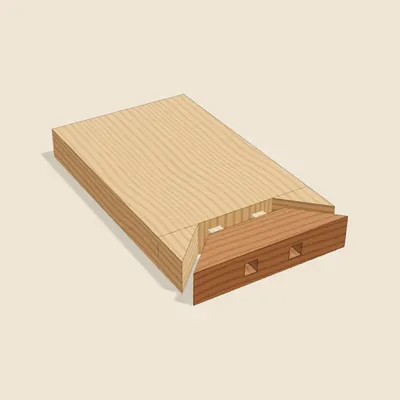
How it works
Why an end strip
On thick boards such as long-table tops and couch-bed railings, the end grain is ugly and the end is where splits start. A straight-grained strip (抹头) across the end hides one and resists the other.
Mitred so nothing shows
To stop the strip’s own end grain showing, the board end and strip are mitred at the corners. The board end carries through or blind tenons, and the strip is mortised to match.
Pressed and glued
The strip is clapped onto the board and glued with animal glue. Some pieces add a long tongue and groove along the joint as well.
How it's made
 Step 1
Mitre the board end
Cut both corners of the board end at 45°.
 Step 2
Leave tenons
Leave through or blind tenons on the board end.
 Step 3
Make the strip
Make the end strip from straight-grained wood, mitred to match.
 Step 4
Mortise the strip
Cut through or blind mortises in the strip.
 Step 5
Clap it on
Press the strip onto the board and glue it.
 Step 6
Check
No end grain shows on the ends.
Variations
Blind tenons
Tenons stop inside the strip.
Through tenons
Tenons show on the outside of the strip.
With tongue and groove
A long tongue and groove added along the joint.
Everted end in one
On some tables the upturned end and the strip are one piece of wood.
Can you CNC this?
Possible, with design or setup changes
The tenon along the board end and the mitred ends of the strip are cut flat. The groove in the strip’s edge may need a slot cutter or the strip on edge. Allow for the board’s seasonal movement as you would by hand.
General note: a round cutter cannot leave a sharp inside corner, so every recess keeps the tool radius. Round the mating edges or add dogbone reliefs. Sloping faces, undercuts and curves may need special bits, extra setups or more axes.
Free STL downloads (one file per part)
Proportions are illustrative, not measured dimensions. The files are unitless: scale them to suit and check fits and allowances before cutting. Each file is a closed (watertight) solid with its mortises and slots already cut, exported in its assembled position, ready to import into CAM or modelling software. Licence: CC BY 4.0 (credit: Chinese Joinery).
In museum collections
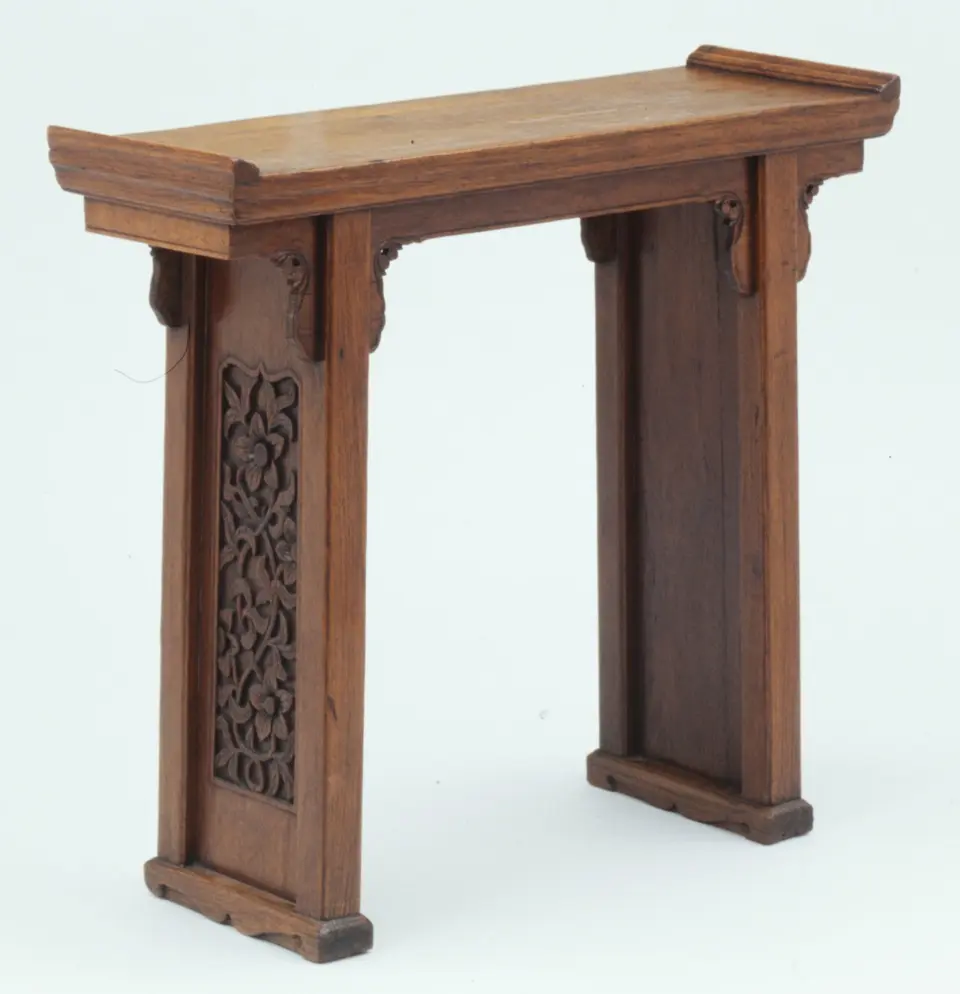
Minneapolis Institute of Art
Related joints
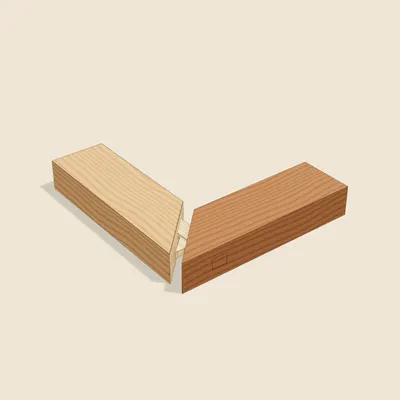
Mitred Frame Joint
géjiǎo sǔnThe 45° corner of every Chinese frame-and-panel top: a tenon through the end plus a little triangular tongue.
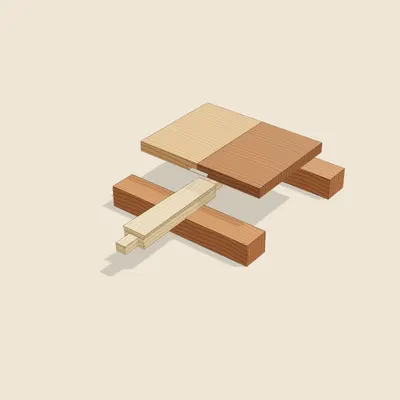
Sliding Dovetail Batten
chuāndàiA tapered dovetail batten driven across the back of a panel, its ends tenoned into the frame: the reason old tabletops stay flat.
Butterfly Key
yíndìng sǔnA bow-tie key, two dovetails back to back, let in across a seam to lock thick boards together.
Questions
What is a pai motou?
A mitred, tenoned end strip fitted across the end of a thick board to hide end grain and stop splitting.
Why mitre it?
So neither the board’s nor the strip’s end grain shows on the visible faces.
Where is it used?
On thick tops of long tables, kang tables and couch-bed railings.