Gan Cheng (赶枨): Stretchers at Staggered Heights
Staggered stretchers · 步步高赶枨
Look at the stretchers under a Chinese chair: the front one is lowest, the sides higher, the back different again.
That is gan cheng, staggered stretchers, and it is about strength more than looks.
- Chinese
- 赶枨 · gǎn chéng
- Variant
- 步步高赶枨 (step-by-step higher)
- Joins
- Several stretchers to one leg
- Found in
- Chairs, stools, tables
- Related
- Big in, small out
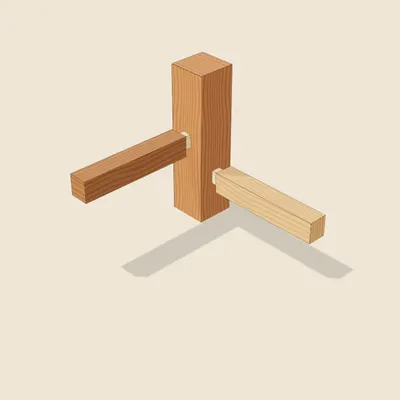
How it works
Spread the mortises
When stretchers from two faces meet one leg at the same height, their mortises meet inside it and weaken it. Staggering the heights spreads them out.
Chairs
Wang Shixiang: a chair’s four base stretchers are usually arranged with the front one low (it’s a footrest), the sides higher, and the back lower again. Another arrangement keeps rising front, sides, back: “step-by-step higher” (步步高赶枨).
How it's made
 Step 1
Two stretchers
Two stretchers meet one leg.
 Step 2
One low
One is set low.
 Step 3
One higher
The other is set higher.
 Step 4
Staggered mortises
The mortises sit at different heights.
 Step 5
Stronger leg
The leg isn’t weakened at one spot.
 Step 6
Step-by-step higher
The rising arrangement on chairs.
Variations
Same height
Where they must be level, as on cabinets, the tenons are cut big in, small out to pass each other.
Can you CNC this?
Yes, with small changes
Each stretcher is an ordinary tenon in a blind mortise; only the heights differ. Each mortise needs its own setup on a different face of the leg, with rounded corners.
General note: a round cutter cannot leave a sharp inside corner, so every recess keeps the tool radius. Round the mating edges or add dogbone reliefs. Sloping faces, undercuts and curves may need special bits, extra setups or more axes.
Free STL downloads (one file per part)
- Leg 腿足 · gan-cheng-leg.stl
- Front stretcher (low) 前枨(低) · gan-cheng-stretcher-front.stl
- Side stretcher (high) 侧枨(高) · gan-cheng-stretcher-side.stl
Proportions are illustrative, not measured dimensions. The files are unitless: scale them to suit and check fits and allowances before cutting. Each file is a closed (watertight) solid with its mortises and slots already cut, exported in its assembled position, ready to import into CAM or modelling software. Licence: CC BY 4.0 (credit: Chinese Joinery).
In museum collections
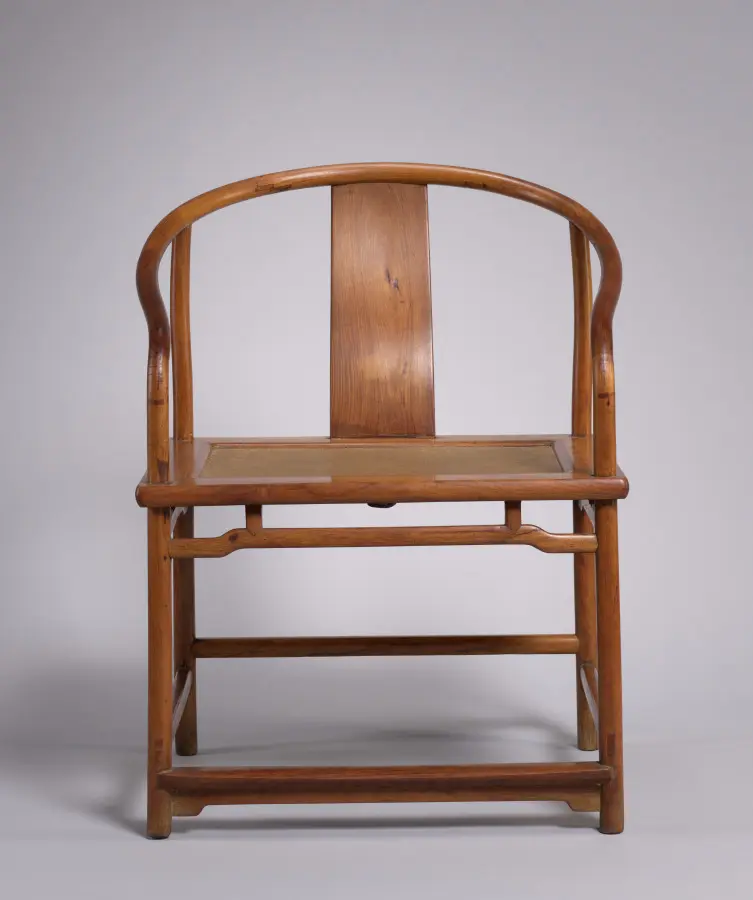
Cleveland Museum of Art
Related joints
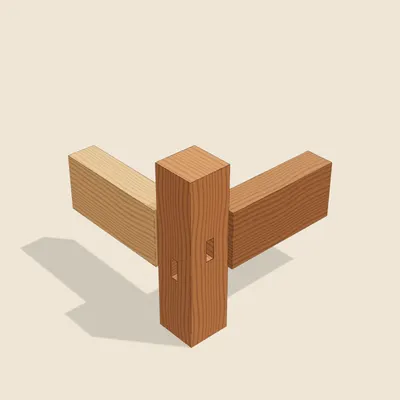
Big-In, Small-Out Tenon
dàjìn xiǎochū sǔnPart blind, part through: a big tenon enters, a small one shows. It lets two stretchers share a leg without weakening it.
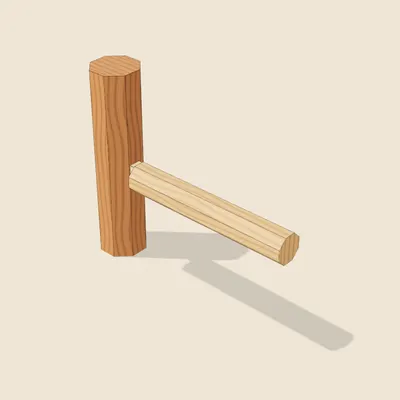
Flying Shoulder
piāo jiānRound stretcher flush with a round leg: tenon on the inner half, the outer half a shoulder that “floats” over the curve.
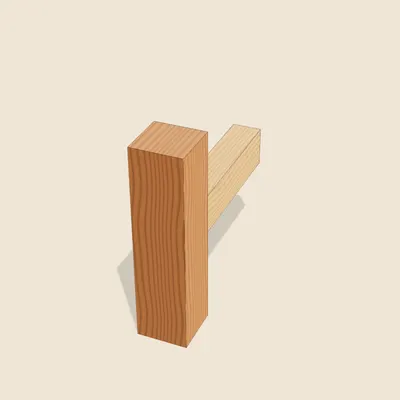
Blind Tenon
bàn sǔnThe tenon stops inside the post, so nothing shows on the outside: neat, a little less strong than a through tenon.
Questions
What is gan cheng?
Arranging stretchers at different heights so their mortises don’t meet inside a leg.
What is “step-by-step higher”?
Front lowest, sides higher, back highest.
What if they must be level?
Use big-in, small-out tenons that pass each other.