
Luoguo Cheng (罗锅枨): the Hump-Backed Stretcher of Chinese Tables
Humpback stretcher · 罗锅枨
A stretcher braces the legs best when it is low. But a low stretcher hits the sitter’s knees.
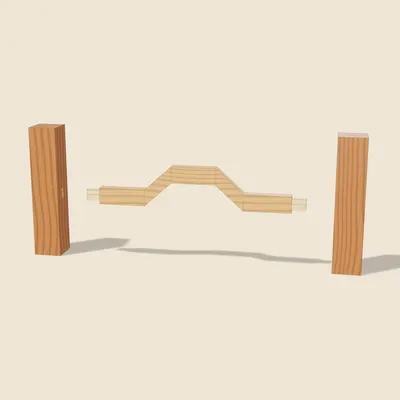
The hump-backed stretcher does both: low at the ends, raised in the middle.
- Chinese
- 罗锅枨 · luóguō chéng
- Joins
- Two legs
- Found in
- Tables, stools and benches
- Signature parts
- Low ends · arched middle · end tenons
- Compare
- Short posts
How it works
A compromise
Wang Shixiang explains that a stretcher set high stiffens the frame more, but gets in the way of the knees. Lowering both ends and raising the middle solves both problems at once. Ming stretchers were made straight or in this hump-backed form.
The end joint
The ends meet the legs as ordinary stretcher-to-leg T-joints: a tenon into a mortise in the leg, shouldered on the face. Short posts or carved spacers often stand on the hump to carry the top.
Proportions in the model are illustrative.
How it's made
 Step 1
Stretcher
A stretcher between two legs.
 Step 2
Hump
Raised in the middle.
 Step 3
Low ends
Low at both ends.
 Step 4
Tenons
Ordinary tenons at the ends.
 Step 5
Legs
The legs close onto the tenons.
 Step 6
Why
Strong low joints, room for knees.
Variations
With short posts
Short posts (矮老) or carved spacers often stand on the hump.
Can you CNC this?
Yes, with small changes
The arched stretcher is a 2D profile cut from a flat board, and its end tenons and the leg mortises are ordinary. Round the mortise corners or the tenon edges to match.
Free STL downloads (one file per part)
- Leg (left) 腿足(左) · luoguo-cheng-leg-left.stl
- Leg (right) 腿足(右) · luoguo-cheng-leg-right.stl
- Hump-backed stretcher 罗锅枨 · luoguo-cheng-hump-backed-stretcher.stl
Before cutting or printing, read the CNC and 3D-printing notes on tool radius, scaling the STL files and their licence.
In museum collections
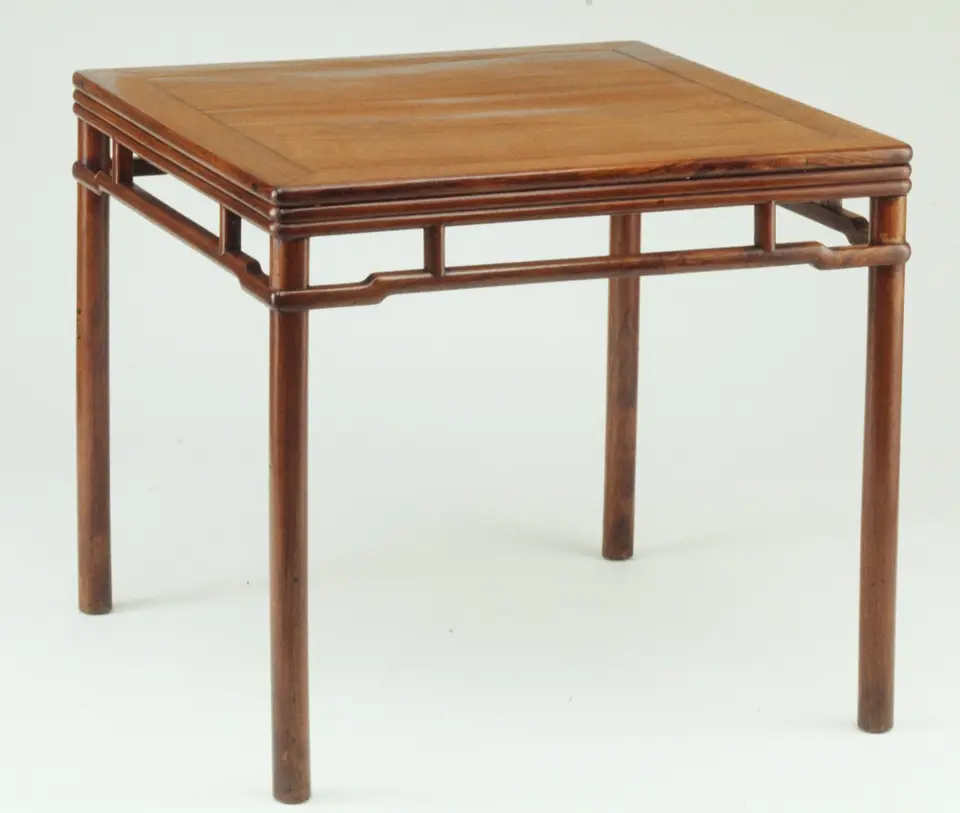
Minneapolis Institute of Art
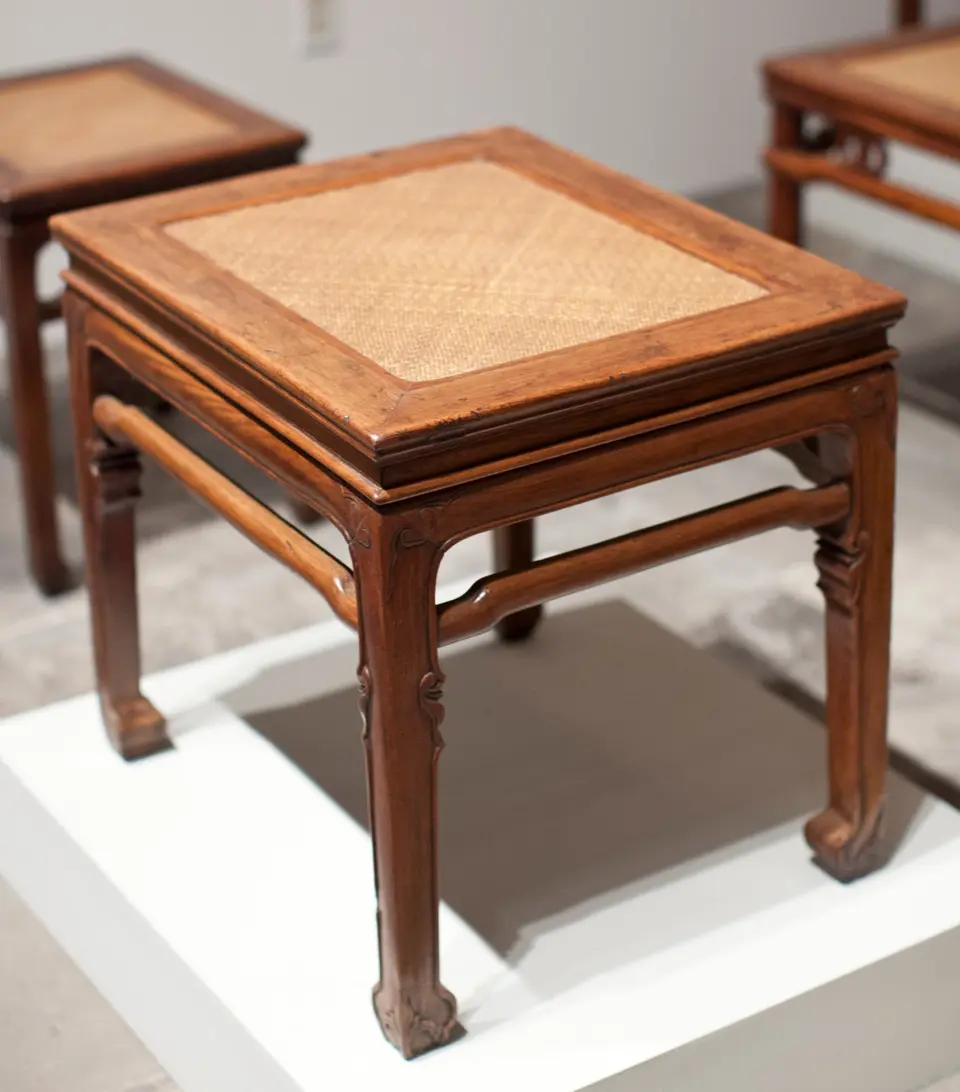
Minneapolis Institute of Art
Where you’ll see it
- Waisted stool · Stretchers: Many waisted stools add a hump-backed stretcher under the apron, low at the ends and raised in the middle.
- One-leg-three-aprons table · Stretchers (when present): Some tables of this form also carry a hump-backed stretcher low on the legs.
- Waistless square table · Hump-backed stretcher: A stretcher low at the ends and arched in the middle braces the legs without hitting the sitter’s knees.
Related joints
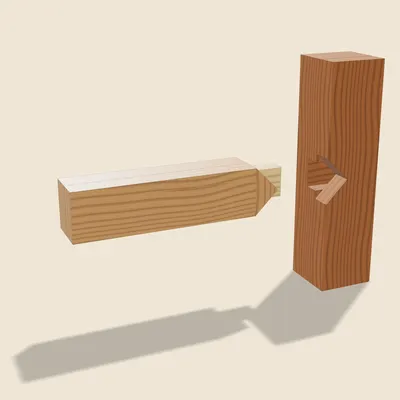
Mitred-Shoulder Joint
géjiān sǔnWhere a rail meets a post, its outer face is cut to a point that fits a matching notch, so mouldings meet cleanly.
Short Struts
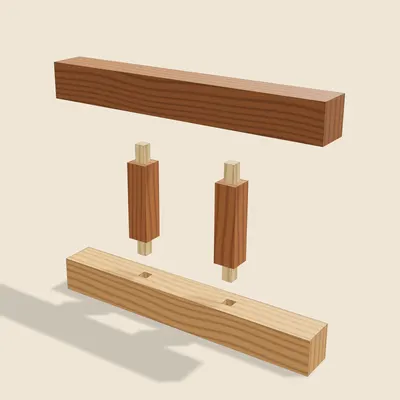
ǎilǎoShort vertical struts between a stretcher and the member above, tenoned at both ends.
Staggered Stretchers
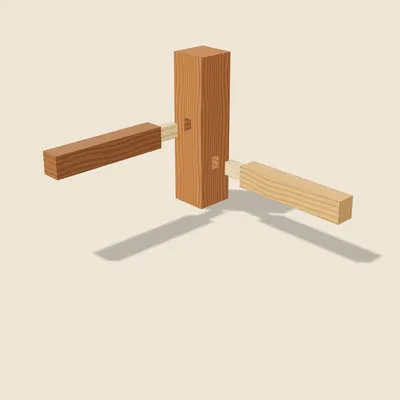
gǎn chéngStretchers from the front and side meet a leg at different heights, so their mortises never weaken it at one spot.
Questions
Why the arch?
To keep the joints low while leaving knee room.
What joint is at the ends?
An ordinary tenon into the leg.
Where is it used?
Tables, stools and benches.
Further reading
- Square table with hump-backed stretcher, 17th century, Minneapolis Institute of Art (collection record)
- Waisted stool, 17th century, Minneapolis Institute of Art (collection record)
- 王世襄《明式家具研究》(Wang Shixiang, Research on Ming Furniture),第 114 页
- 王世襄《明式家具研究》(Wang Shixiang, Research on Ming Furniture),第 104–106 页,图 3.9–3.12