
Gao Shuyao (高束腰): the High Waist with Short Posts and Panels
High waist · 高束腰加矮老
Most waisted tables have a narrow recessed band under the top.
In a high waist that band is raised into a tall zone of short posts and panels.
- Chinese
- 高束腰 · gāo shùyāo
- Joins
- Leg, ledge, apron, short posts, panels, top
- Found in
- Kang tables, square tables, side tables
- Signature parts
- Exposed leg · short posts · panels in grooves
- Compare
- Waisted corner
How it works
A taller waist
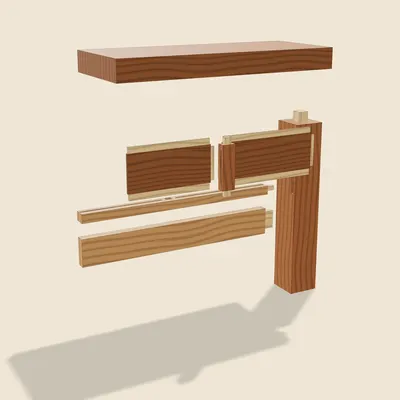
In a high-waisted piece the upper part of the leg is left tall and shows on the outside. Short posts (矮老) divide the waist into bays, and a panel (绦环板) fills each bay, held in grooves. Below the waist runs a ledge (托腮) and below that the apron.
How it goes together
The apron and ledge tenon into the leg. The short posts tenon into the ledge below and the top above, and the panels’ edges sit in grooves in the legs, posts, ledge and top.
Proportions in the model are illustrative.
How it's made
 Step 1
High waist
A tall waist under the top.
 Step 2
Leg
The leg runs up through the waist.
 Step 3
Apron and ledge
Apron and ledge tenon into the leg.
 Step 4
Short posts
Short posts divide the waist.
 Step 5
Panels
Panels sit in grooves.
 Step 6
Top
The top goes on last.
Variations
Without posts
A high waist can also be plain, without posts and panels.
Can you CNC this?
Possible, with design or setup changes
Every part is a simple tenon, mortise or groove, but there are many grooves on several faces of the leg and posts, so expect several setups. Proportions should be taken from a real piece.
Free STL downloads (one file per part)
- Leg 腿足 · gao-shuyao-leg.stl
- Apron 牙条 · gao-shuyao-apron.stl
- Ledge 托腮 · gao-shuyao-ledge.stl
- Short post 矮老 · gao-shuyao-short-post.stl
- Waist panel A 绦环板甲 · gao-shuyao-panel-a.stl
- Waist panel B 绦环板乙 · gao-shuyao-panel-b.stl
- Top (simplified slab) 面(简化为整板) · gao-shuyao-top.stl
Before cutting or printing, read the CNC and 3D-printing notes on tool radius, scaling the STL files and their licence.
In museum collections
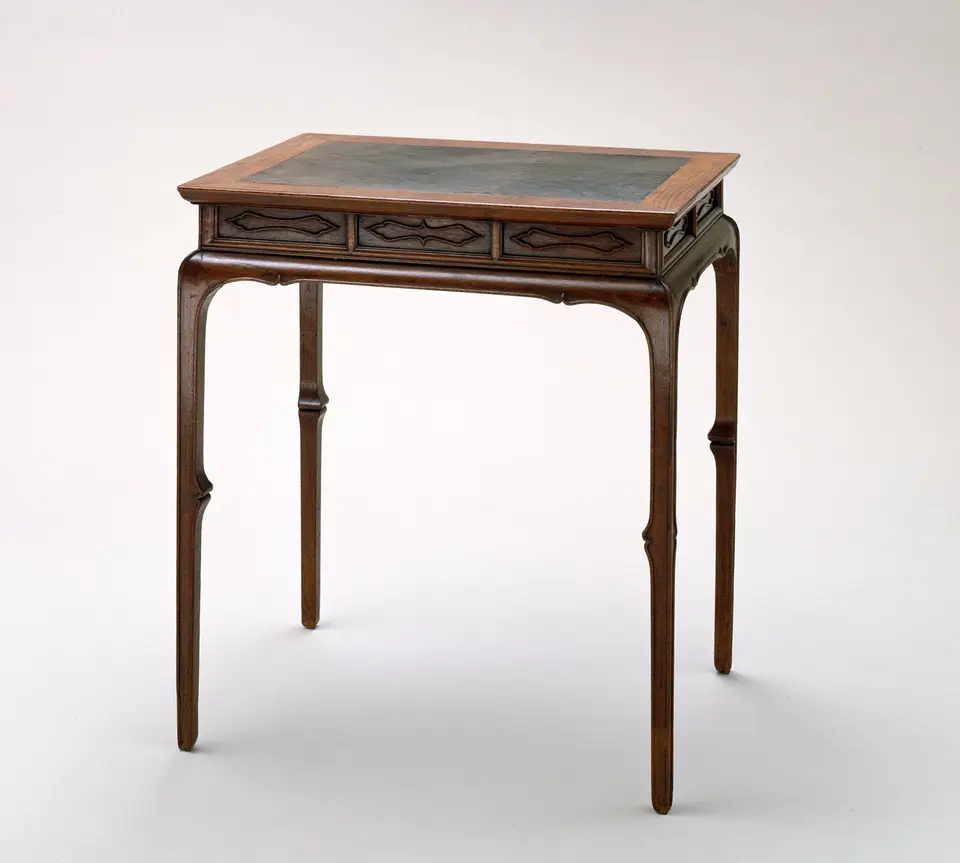
Minneapolis Institute of Art
Where you’ll see it
- High-waisted table · High waist: The tall waist is divided by short posts; panels sit in grooves between them, the leg, the ledge and the top.
- High-waisted table · Ledge, apron and leg: Below the waist a ledge and apron tenon into the leg; at the corner the same shoulder logic as a baojian joint keeps the faces flush.
Related joints
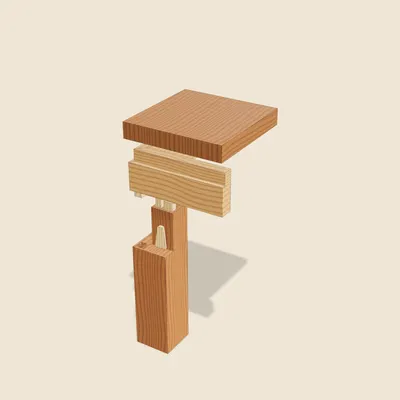
Baojian Joint
bàojiān sǔnThe hidden lock behind every waisted Ming table corner: a mitred shoulder, a triangular tenon and a tapered pin.
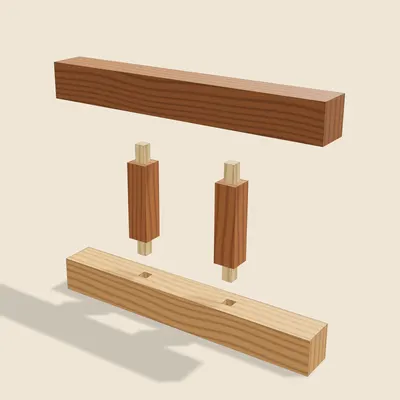
Short Struts
ǎilǎoShort vertical struts between a stretcher and the member above, tenoned at both ends.
Frame and Floating Panel
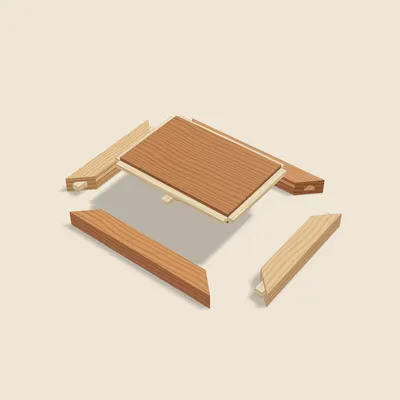
cuánbiān dǎcáo zhuāngbǎnA mitred frame grooved on the inside, a thin panel with a tongued edge floating in the groove, and battens underneath.
Questions
What is the ledge?
A projecting rail (托腮) between waist and apron.
What fills the waist?
Short posts and grooved panels.
Where is it seen?
Kang tables and side tables.
Further reading
- High-waisted table, late 16th century, Minneapolis Institute of Art (collection record)
- 王世襄《明式家具研究》(Wang Shixiang, Research on Ming Furniture),第 113 页,图 3.32a、3.32b
- 王世襄《明式家具研究》(Wang Shixiang, Research on Ming Furniture),第 119 页